

August 19, 2026
Hydrogen spin-out Hysata a national finalist for research commercialisation
ÁñÁ«ÊÓƵapp hydrogen company recognised among Australia’s leading examples of research translated into commercial impact
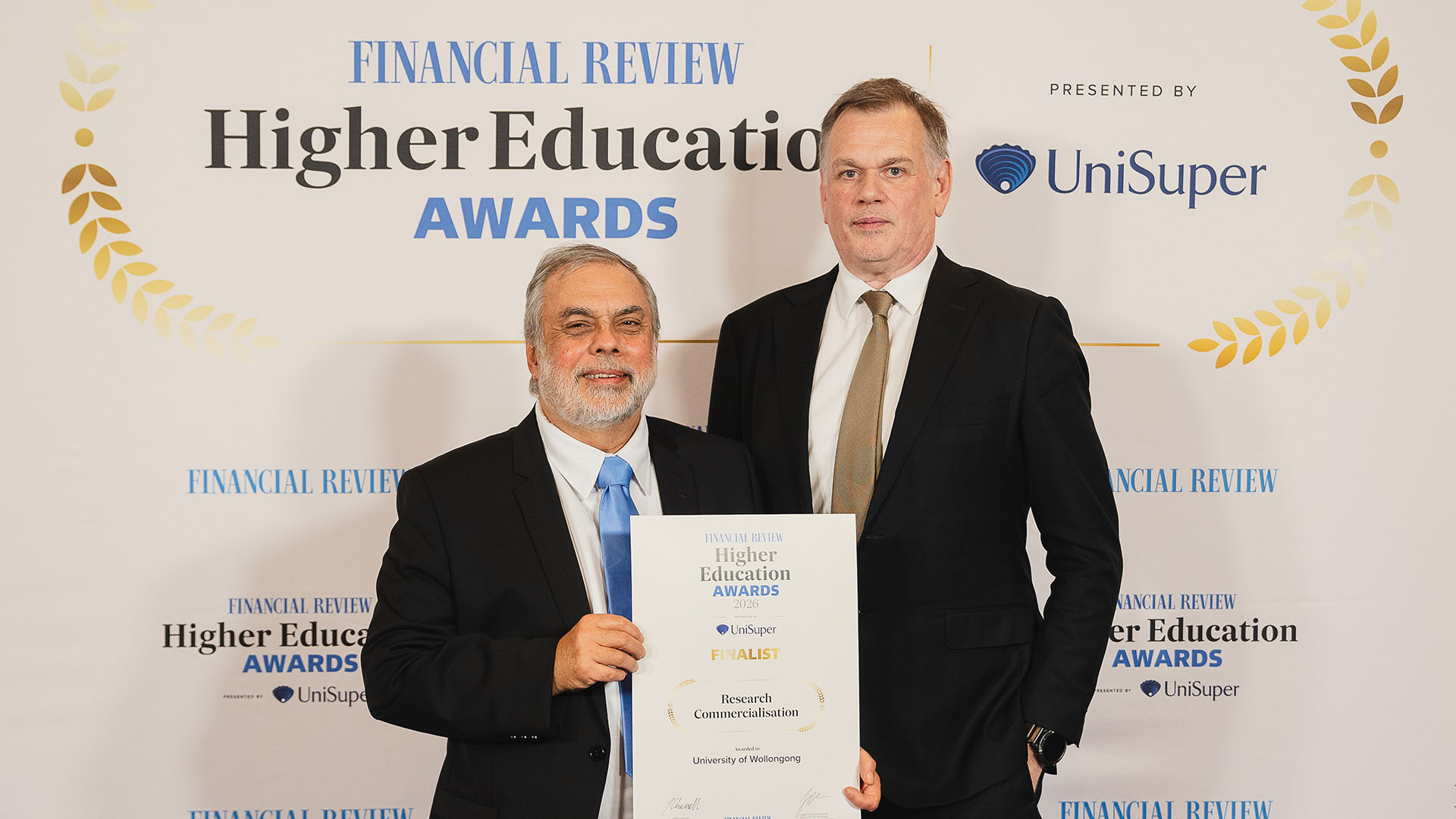
ÁñÁ«ÊÓƵapp of ÁñÁ«ÊÓƵapp (UOW) spin-out company has been named a finalist in the Research Commercialisation category at the 2026 Australian Financial Review Higher Education Awards, recognising its journey from a UOW laboratory breakthrough to a global hydrogen technology company with a growing workforce in Port Kembla.
The award recognises excellence in translating publicly funded research into products and companies delivering commercial and economic benefits. Hysata is among the national finalists recognised for turning breakthrough electrolyser technology developed by UOW researchers led by Distinguished Professor from the laboratory to global clean-energy markets.
UOW Vice-Chancellor Professor Max Lu AO said Hysata demonstrated the impact that can be achieved when university research is successfully translated into real-world application.
“An important measure of research excellence is what happens beyond the laboratory. Hysata shows how a breakthrough developed at UOW can be translated into a commercially viable technology, attracting significant investment and creating high-tech jobs here in the Illawarra,” Professor Lu said.
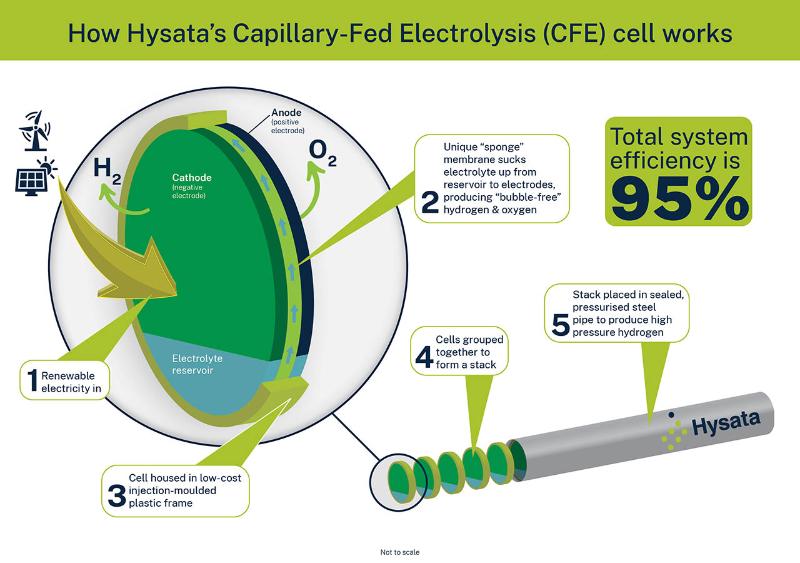
Hysata was founded in 2021 to commercialise UOW research into a capillary-fed electrolysis cell designed to significantly improve the efficiency of hydrogen production. Hysata’s world-leading electrolyser technology converts renewable electricity to green hydrogen at 95 per cent system efficiency, well above the 75 per cent of conventional technologies.
Professor Swiegers said the recognition demonstrated the potential of university research to deliver global commercial and economic impact.
“Seeing that technology move from laboratory to proven commercial reality, underpinning international commercial agreements and a growing workforce in the Illawarra, shows what is possible when university research is backed to go the distance by the public and private sector,” he said.
Since spinning out of UOW, Hysata has raised $220 million in private capital and received significant Australian and NSW Government support, including over $30 million from the Australian Renewable Energy Agency.
Hysata's 8,500-square-metre headquarters in Port Kembla, opened in 2023, now employs 130 people in high-tech manufacturing and engineering roles, providing opportunities for UOW graduates and interns and contributing to the development of a new clean-energy industry in the region.
The company has also progressed its technology towards commercial deployment, including its first binding order for a megawatt scale system to delivered in 2027, a six-month trial in Jeddah with Saudi power utility ACWA Power and Joint Development Agreements with POSCO Holdings and POSCO E&C.
