ÁñÁ«ÊÓÆµapp

NSW Data Sharing Jury

NSW Citizens’ Jury on health data sharing

The NSW Citizens’ Jury on health data sharing has been commissioned by the NSW Ministry of Health Clinical Innovation and Research Division, and is supported by the Digital Health Cooperative Research Centre (DHCRC-0291).

NSW Health wants to understand what the community thinks is acceptable when sharing data for research and innovation purposes, to improve future treatment and health outcomes for people in NSW.

The citizens’ jury was made up of 30 well-informed, diverse NSW residents. The jury was selected following a democratic lottery process with approximately 6,000 households across the state invited to take part.

The jury process took place in March 2026, both online and in person. Recommendations from the jury are being considered in ongoing NSW Health policy planning on how patient health data is used and shared.

Following the jury process, NSW Health will share the jury’s recommendations and its response.
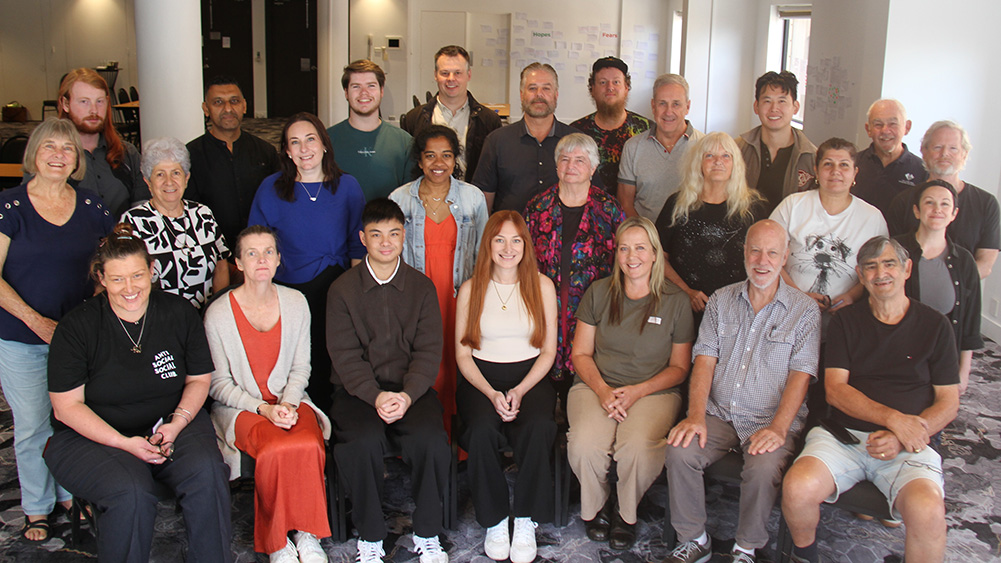
Group photo of NSW Data Jury jurors gathered indoors, with approximately 25 participants arranged in seated and standing rows in a workshop or meeting space. Whiteboards and notes are visible in the background, reflecting the collaborative nature of the project. Photo taken by Belinda Fabrianesi, posted with consent from jurors and HREC


Project background

This project aimed to produce action-guiding advice for NSW Health to inform the implementation of the and the NSW Health Data and Analytics Strategy. The proposal to conduct a Citizens’ Jury on this question was approved by the Hon. David Harris, MP, the Minister for Medical Research in NSW. The NSW Health sponsors (on behalf of the Clinical Innovation and Research Division) are Dr Kim Sutherland, the Executive Director of the Office for Health and Medical Research, and Professor Andrew Milat, Executive Director, Intelligence and Support for Innovation, Transformation and Evaluation at the NSW Agency for Clinical Innovation.

This citizens’ jury—an innovative deliberative methodology—enables a group of well-informed, diverse NSW Residents to generate recommendations that will influence the policy and regulatory environment for data sharing and use in NSW.

This project received ethics approval from UOW’s Human Research Ethics Committee (2025/156).

Our question to the jury

Citizens’ juries consider a remit – a focused question that directs their discussion. The remit for the proposed citizens’ jury is: NSW Health shares health data with other organisations for research and innovation. How should this be done?

Within this remit, the jury was asked to focus on four key areas:

  1. What types of organisations should health data be shared with, and for what purposes?
  2. What approaches to consent should be used for different types of health data sharing?
  3. When NSW Health data are shared, who should bear the costs, and who should get the benefits?
  4. What should NSW Health communicate with the people of NSW about sharing health data for research and innovation?

Jurors focused on policy questions that NSW Health needs to make decisions about. To help the jury answer these questions together, they learned a lot about health data, and how data are shared and used. 

screen with an ai bot

The jury selection process

Jurors were selected through a democratic lottery process, managed by , an independent specialist agency. Approximately 6,000 invitation packs were distributed across NSW, covering urban, rural and regional areas. From those who responded, an algorithmic system selected 30 participants to ensure the jury reflects NSW’s diverse population. Selection criteria will include age, gender, ancestry, education level, urban or non-urban location, and health status. Once the recruitment process is complete, further details about the jury's composition will be provided here.

The Expert Reference Group

We established an interdisciplinary Expert Reference Group (ERG) to provide guidance on project design based on the members’ expertise, and to connect the project to the expert communities the members represent. The ERG helps us ensure that we present the right evidence to the jurors in the right way, and help jurors understand the diverse perspectives of key stakeholders on the topic. 

  • Professor Sallie Pearson (Chair)
    Head of the Medicines Intelligence Research Program at the School of Population Health, UNSW
  • Ms Sharon Smith
    Executive Director System Information and Analytics, NSW Ministry of Health;
  • Dr Elizabeth Deveny
    CEO, Consumer Health Forum
  • Professor Claire Vajdic
    Chair, NSW Population & Health Services Research Ethics Committee; The Kirby Institute, Medicine & Health, UNSW
  • Dr Michelle Cretikos
    Executive Director, Centre for Epidemiology and Evidence, NSW Ministry of Health NSW Ministry of Health
  • Professor Louisa Jorm
    Director, Centre for Big Data Research in Health, UNSW
  • Ms Nadia Levin
    CEO Research Australia
  • Anthony Brown
    CEO Health Consumers NSW
  • Dr Robyn Lindner
    Director, State Committees and Engagement, AusBiotech Ltd
  • Dr Nicolette Hodyl
    Chief of Research Translation and Healthcare Improvement, Hunter Medical Research Institute, representing the Association of Australian Medical Research Institutes
  • Mr Tim Wright
    Director of Data Sharing and Engagement team, Office of the National Data Commissioner
  • Associate Professor Courtney Ryder
    Discipline Lead for Trauma and Injury, College of Medicine and Public Health, Flinders ÁñÁ«ÊÓÆµapp

Information given to jurors

An evidence package is a bundle of information relevant to the topic of the citizens’ jury and critical for the jury to learn about and understand so it can respond to the jury remit.

Evidence in each package were presented in different formats, including a printed Participant Information Booklet, short videos, and additional resources as needed. All materials are peer-reviewed by members of the expert reference group and all expert witnesses (see list below).

Evidence videos

Jurors engaged with the following videos through VisionsLive, an online qualitative research space. The full script of all videos was also made available to jurors. Scripts will be available soon.

Week 1: Sharing Health Data – The Foundations

  • Video 1.1: Using health data – some examples
  • Video 1.2: What is NSW Health, and how do they collect, use and share health data?
  • Video 1.3: Who wants access to NSW Health data, what do they want, and how does it work?

Week 2: Protecting Health Data and Finding the Right Balance

  • Video 2.1: Some context for data sharing
  • Video 2.2: Guidelines, rules and systems for data sharing
  • Video 2.3: Consent
  • Video 2.4 Different approaches to data sharing: finding the right balance

Week 3: Secure Data Environments, Costs and Benefits

  • Video 3.1: What is a Secure Data Environment?
  • Video 3.2: How much does it cost to share data, and how should those costs be shared?
  • Video 3.3: What is ‘benefit sharing?’

The jury process

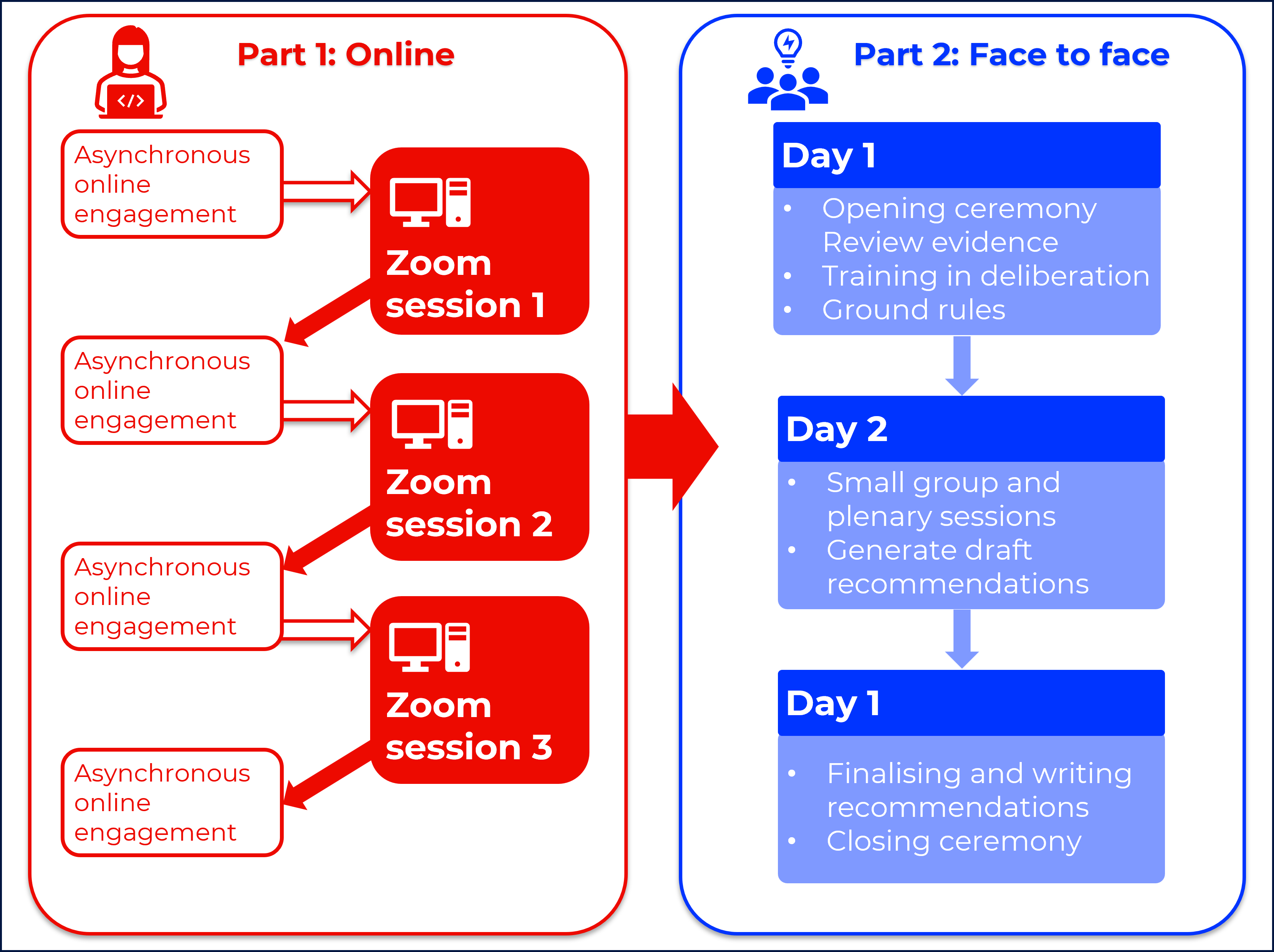
We will use our well-established hybrid (online and face to face) jury method developed by Professor Stacy Carter.

Part 1: Online Asynchronous, online engagement | Zoom session 1-3 | Part 2: Face to face Day 1  Opening ceremony  review evidence , Training in deliberation, Ground rules  |  Day 2  Small group and plenary sessions,Generate draft recommendations | Day 3  Finalising and writing recommendations  Closing ceremony

Part 1

Part 1 is the online component of the jury process. Participants will access evidence, and interact with one another, using an online bulletin board. This part will include three Zoom sessions held for 120 minutes on a weekend. For each of the Zoom sessions, participants will have an opportunity to interact with experts.

Part 2

Part 2 is the three-day, face-to-face meeting that will involve activities such as training in deliberation, generating issues to address through plenary and small group sessions, drafting of recommendations responding to the remit, and finalising and writing recommendations.

Frequently Asked Questions

The Australian Centre for Health Engagement, Evidence and Values (ACHEEV) at the ÁñÁ«ÊÓÆµapp of ÁñÁ«ÊÓÆµapp is running the jury.

The project has been commissioned by the NSW Ministry of Health Clinical Innovation and Research Division, and is supported by the Digital Health Cooperative Research Centre (DHCRC-0291).

ACHEEV specialises in connecting health decision-makers to the Australian public. It does this via processes like citizens’ juries. We help Australians learn about real-world problems faced by health systems and then give advice to decision-makers.

The Digital Health Cooperative Research Centre (DHCRC) brings together universities, government, technology companies, and healthcare organisations to improve healthcare using digital technology. It is funded by the Australian Government and supported by more than 60 partners from the university, healthcare, and tech sectors.

NSW Health provides health services to the people of NSW – for example, in hospitals and community health centres.

The Sortition Foundation is a not-for-profit organisation. They specialise in recruiting for these kinds of events. They select people by lottery, in a way that is representative of the wider population.

NSW Health wants to understand what the community thinks is acceptable when sharing data for research and innovation, to improve future treatments and health outcomes.

The NSW Citizens’ Jury on Health Data Sharing gives people across NSW the opportunity to have a real say in how health data are shared and used, through an independent and transparent process. The jury’s recommendations will help to shape the future of health data sharing in NSW.

A citizens’ jury is designed to give people a say in policies that affect them. Citizens’ juries are used all over the world. Invitations are sent out across Australia NSW by democratic lottery (a random draw). Participants are chosen to mirror the community's diverse backgrounds. The people who attend learn about the issues and then discuss them with one another. They then recommend what should happen and how things should change.

Health data refers to all the information recorded about us when we get health care. This could include test results, notes written in our medical records, records of the appointments we had, or images taken in X-Ray departments. Health data being considered in this project does not include personal information such as names, addresses or financial information

Data sharing means moving data from one place to another. For this jury, we are interested in how NSW Health should be able to give or sell data to other organisations, like universities, community organisations, other government departments, or companies.

This jury is about sharing data so it can be used to develop something new. This could be for research, which develops new knowledge, or for innovation – for example, to create devices, new medicines, or new ways of doing things in healthcare.

To invite households to take part, 6,000 addresses will be selected at random from the Australia Post database.

NSW residents 18 years or older who receive an invitation by mail may apply to take part in the jury. However, some people may not be allowed to participate if they have conflicting interests.

Once registration has closed, 30 people will be chosen by lottery (at random) to ensure people from across NSW attend.

Being part of the jury is completely voluntary.

Jurors will have the chance to meet with people from different backgrounds across NSW. Facilitators will help participants discuss the issues in small groups, to make sure everyone has their voice heard. Jurors don't need to have any prior knowledge of the topics - the research team will provide all the information that jurors need to participate.

The jury will be held in two parts in March 2026.

Part 1 will be held online over 11 hours in total.

Part 2 will be held in person over 19.5 hours in total.

Jurors can withdraw from taking part in the jury at any time.

Each participant will receive appropriate remuneration to compensate them for their time. Jurors’ accommodation, transport and meals will be paid for. If needed, researchers will provide a digital device and access to internet connection to support online participation.

Everyone will have access to a prayer room or quiet space during the day. The research team will try their best to keep information provided be as easy to understand as possible. Jurors are encouraged to ask experts and speakers to explain if something is not clear.

The jury will produce a set of recommendations, with reasons. Representatives of NSW Health will attend to hear the recommendations of the jury in the closing ceremony of the face to face meeting. After the jury process is complete, NSW Health will share what the jury says and how it is responding.

The expert witnesses

In collaboration with the ERG and partner organisations, we appointed experts and stakeholders who were asked to address what they see as the most important benefits and risks when considering sharing patient data outside of a public health system for research and innovation.

Professor Jorm applies advanced analytics to health and medical big data - including hospital, Medicare and pharmaceutical records - to generate real-world evidence that improves health care and patient outcomes. She is the Foundation Director of the Centre for Big Data Research in Health at the ÁñÁ«ÊÓÆµapp of New South Wales and a leading advocate for the research use of routinely collected health data. Louisa is also a member of this project’s expert reference group.

Dr Cretikos is a public health physician with a PhD in health services research. Dr Cretikos is currently Executive Director, Centre for Epidemiology and Evidence, within the Population and Public Health Division, NSW Ministry of Health. The Centre for Epidemiology and Evidence has responsibility for managing maternity and perinatal data, for supporting the monitoring and evaluation of priority Population Health programs, and for supporting the Human Services Data Partnership across NSW. Michelle is also a member of this project’s expert reference group.

Dr Brown is the Chief Executive Officer of Health Consumers NSW (HCNSW). HCNSW is the peak consumer group in NSW, it is an independent, membership-based charity that works to ensure that health consumers (patients, carers and families) are involved in the decisions that impact on them. Anthony is also a member of this project’s expert reference group.

Dr Flack is the Senior Manager, Strategy and services for the Population Health Research Network (PHRN) which is Australia’s national data linkage infrastructure. She is an expert in national data linkage, data governance and research ethics.

Emma is a qualified lawyer with a B.A (Hons) LLB, and LLM, and practised at Gadens before commercialising a CRC and running health and legal software companies. Emma is CEO of the Medical Software Industry Association (MSIA). Emma’s other interests and positions include Past-President of the Australian and New Zealand International Association of Privacy Professionals, and Director of the Australian Digital Health Agency.

Sharon is the Chief Data Officer, NSW Health and Executive Director of the System Information and Analytics branch. In this role, Sharon ensures that NSW Health meets its state and national reporting obligations and maintains high standards of public accountability and transparency in the health system. Sharon is also a member of this project’s expert reference group.

Carolyn is an Honorary Senior Lecturer at Macquarie Law School, Macquarie ÁñÁ«ÊÓÆµapp, Sydney, and a legal and public policy research consultant. Prior to joining Macquarie ÁñÁ«ÊÓÆµapp in an academic role, Carolyn worked for three decades in Australian governments at the federal, state and territory levels including the Australian Government Attorney-General’s Department and the Australian Law Reform Commission.

Adam is a Wiradjuri researcher working at the intersection of Indigenous Data Sovereignty, genomics, and public health data governance. He is Australia’s first Indigenous bioinformatician and works with the National Centre for Indigenous Genomics and Black Ochre Data Labs.

Sophie is a pharmacist who has over 15 years’ experience working in community and hospital settings. Since 2017, Sophie has worked with electronic medical records for major tertiary hospitals in Melbourne, Victoria. Sophie’s focus areas include clinical decision support systems, patient portals, and quality improvement.

Professor McLachlan is a pharmacy academic with experience in clinical pharmacology. He is Head of School and Dean of Pharmacy at The ÁñÁ«ÊÓÆµapp of Sydney. He serves as chair for a Bellberry Human Research Ethics Committee (HREC) and previously member then chair of the Sydney Local Health District HREC Concord Hospital (2006-2017).

Philip is the Deputy Australian Statistician leading the Data and Statistical Practices Group at the Australian Bureau of Statistics (ABS). This Group is responsible for sourcing data, providing statistical infrastructure, methodological and data science leadership to the ABS.

Professor Chambers is the Director of the National Perinatal Epidemiology and Statistics Unit (NPESU), UNSW Sydney. The NPESU a leading research unit with strengths in reproductive medicine, pregnancy and the neonatal period. Professor Chambers is the Data Custodian of the Australian and New Zealand Assisted Reproductive Technology Database (ANZARD), the Australian and New Zealand Neonatal Network (ANZNN).

Matthew is the Head of the Data and Research Services Division at the Sax Institute, overseeing the Secure Unified Research Environment (SURE), the 45 and Up Study, and the 18 and Up Study. Matthew has more than 20 years’ experience across health survey design and implementation, large scale data collection, data governance, and secure research infrastructure.

Courtney is an Aboriginal injury epidemiologist, Discipline Lead for Trauma and Injury, Co-director of the Health Equity Impact Program, and Matthew Flinders Fellow at Flinders ÁñÁ«ÊÓÆµapp. A central contribution of her work is advancing Indigenous Data Governance and Sovereignty for strength-based data tools, data collection, analysis and reporting. Courtney is also a member of this project’s expert reference group.

Eric is the President of CanRevive Incorporated, the first and one of the largest community support organisations for Chinese-speaking people with cancer and their caregivers. Eric set the strategic direction of CanRevive and led the executive committee, which oversees all aspects of the organisation’s activities.

Brian has ‘lived experience’ of the aged and health care systems. He is also a tenured Consumer Representative member of the Royal Prince Alfred Hospital Zone Human Research Ethics Committee and the Lumos data linkage program Stakeholder Reference Group (NSW Ministry of Health).

The research team

  • Ms Lucy Carolan
  • Ms Belinda Fabrianesi
  • Ms Emma Frost
  • Tara Dimopoulos-Bick
  • Dr Kathleen Prokopovich

Get in touch


For information about the process, contact the research team