

Building tech for the Moon and Mars
A UOW PhD graduate reflects on the journey from stargazing in Arizona to building tools for future space missions
April 21, 2026
Molly Kirkpatrick traces a winding path from stargazing in Arizona to building instruments for future space exploration.
A childhood under wide open skies
If you ask Molly Kirkpatrick when she first became interested in space, she does not point to a specific class or moment of inspiration.
She points to the night sky.
Growing up in Arizona, she spent hours as a child simply looking up. The desert air made the stars unusually clear, almost close enough to feel within reach.
“I’ve always liked that we don’t know everything,” she says. “Space still feels like a mystery.”
At that age, it was not about careers or research. It was curiosity, plain and simple.
A change of scenery, and plans
That interest eventually travelled across the world. When Molly was in school, her family moved from the United States to Australia. What was meant to be a short adventure turned into a permanent relocation to the New South Wales South Coast.
Suddenly, life looked very different, new country, new schools, new direction.
But the habit of looking up at the sky never changed.
Finding a path without a map
At university, Molly did not start out with a clear plan to work in space science.
She enrolled at the ÁñÁ«ÊÓƵapp of ÁñÁ«ÊÓƵapp and studied physics alongside materials engineering, drawn more by how things work than where they might lead.
“I just liked figuring things out,” she says.
That mix turned out to be important later, even if she did not know it at the time.
Where science becomes real
During her undergraduate degree, Molly completed an industry placement with CSIRO’s sensing and sorting group.
It was her first real look at science outside the classroom, where research meets practical use.
The team builds sensor systems that can analyse materials in real time, often for mining and industrial applications. 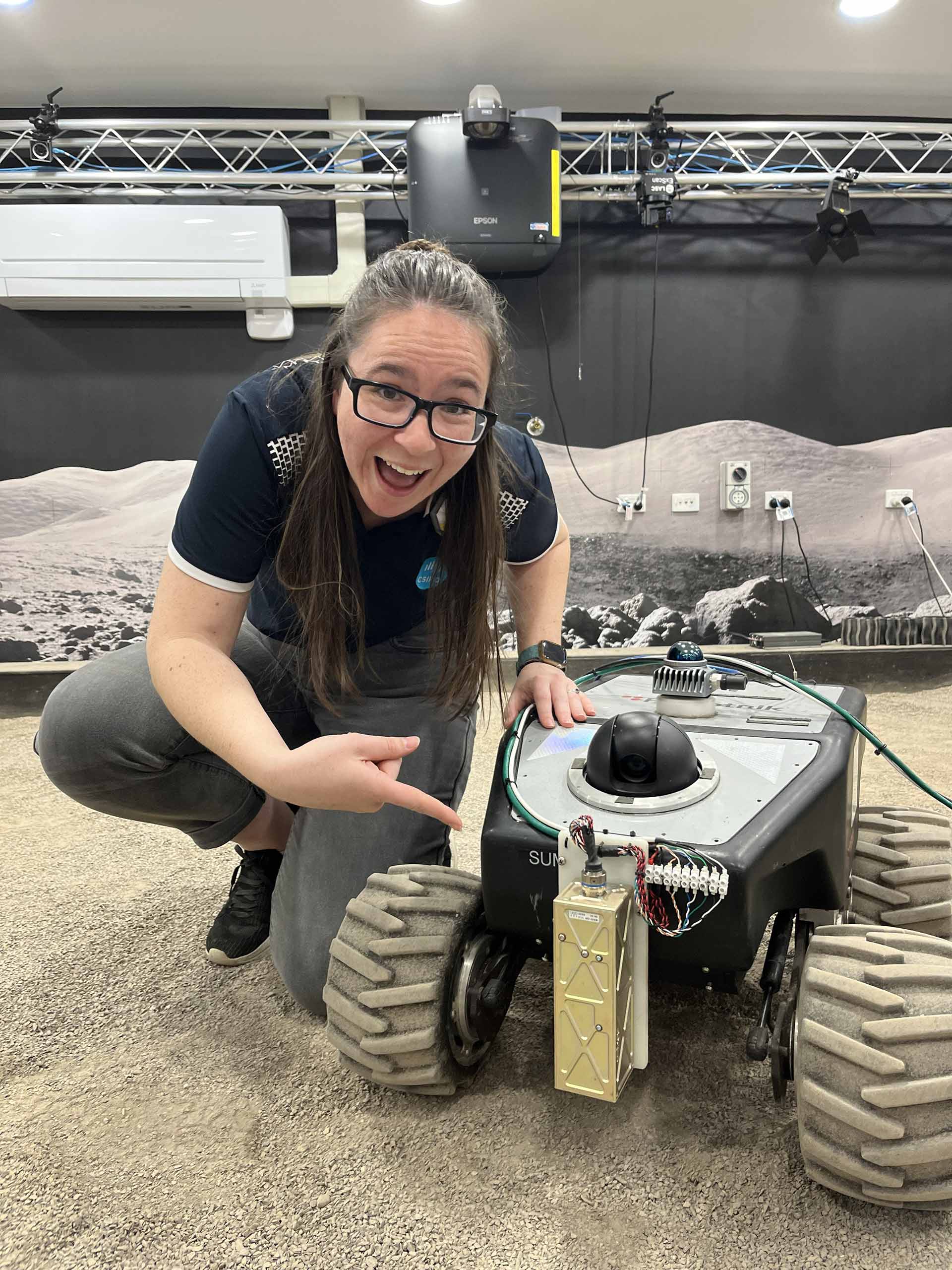
In simple terms, they help answer a straightforward question: what is actually in this material?
“It’s about knowing what you’re dealing with,” she says.
That experience stuck with her.
The unexpected turn toward space
Somewhere between physics equations and engineering labs, her interest slowly shifted toward space applications.
Not because she planned it, but because the questions started to feel bigger.
What would it take to do this on another planet?
How do you build tools that work millions of kilometres away from Earth?
Her PhD eventually focused on one of those problems, developing X-ray fluorescence techniques for space exploration.
Put simply, her work is about figuring out what things are made of.
She uses a technique where X-rays are directed at rocks or materials, which then emit signals that reveal their elemental makeup.
“It’s a way of reading what something is made of- like an elemental fingerprint,” she says.
That might sound niche, but in space exploration it becomes essential.
If humans are going to live or work on the Moon or Mars, they will need to use what is already there, water, oxygen, building materials. And to do that, you first need to know what is available.
Designing for space, where everything matters
Unlike Earth-based labs, space research comes with strict limits. Everything has to be smaller, lighter and more energy efficient.
“You don’t get to bring everything with you,” she says. “So you have to be smart about what you send.”
Her PhD work focused on making these instruments more compact and practical for future missions.
In 2024, Molly spent three months at NASA’s Jet Propulsion Laboratory in California.
It was her first time working in the United States on space research at that level.
What stood out most was not the technology, but the people.
“They were so used to it,” she says. “Things that felt incredible to me were just normal work for them.”
For a student researcher, it was both humbling and inspiring.
Mission control moments
One of the highlights of her time there was visiting mission control, where spacecraft across the solar system are monitored.
“It felt unreal sitting there,” she says. “That’s where decisions are made for Mars missions.”
It was a reminder that her work was part of something much larger.
Back in the lab
PhD life was a mix of lab work, coding and problem solving.
Some days involved testing instruments. Others involved building software models to interpret results.
“It’s not just rockets and space,” she says. “A lot of it is just trying things, fixing things, and trying again.”
When it all comes together
One of the key milestones in her research was testing her instrument in a Moon-like environment in Australia.
Seeing it operate in a realistic setting brought together years of work.
“That was a big moment,” she says. “Everything suddenly made sense.”
As the project grew, so did the team behind it.
What began as a personal PhD project became a collaboration involving engineers, programmers and scientists from different fields.
“That was probably the hardest part,” she says. “Learning how to manage all of that together.”
What finishing a PhD really means
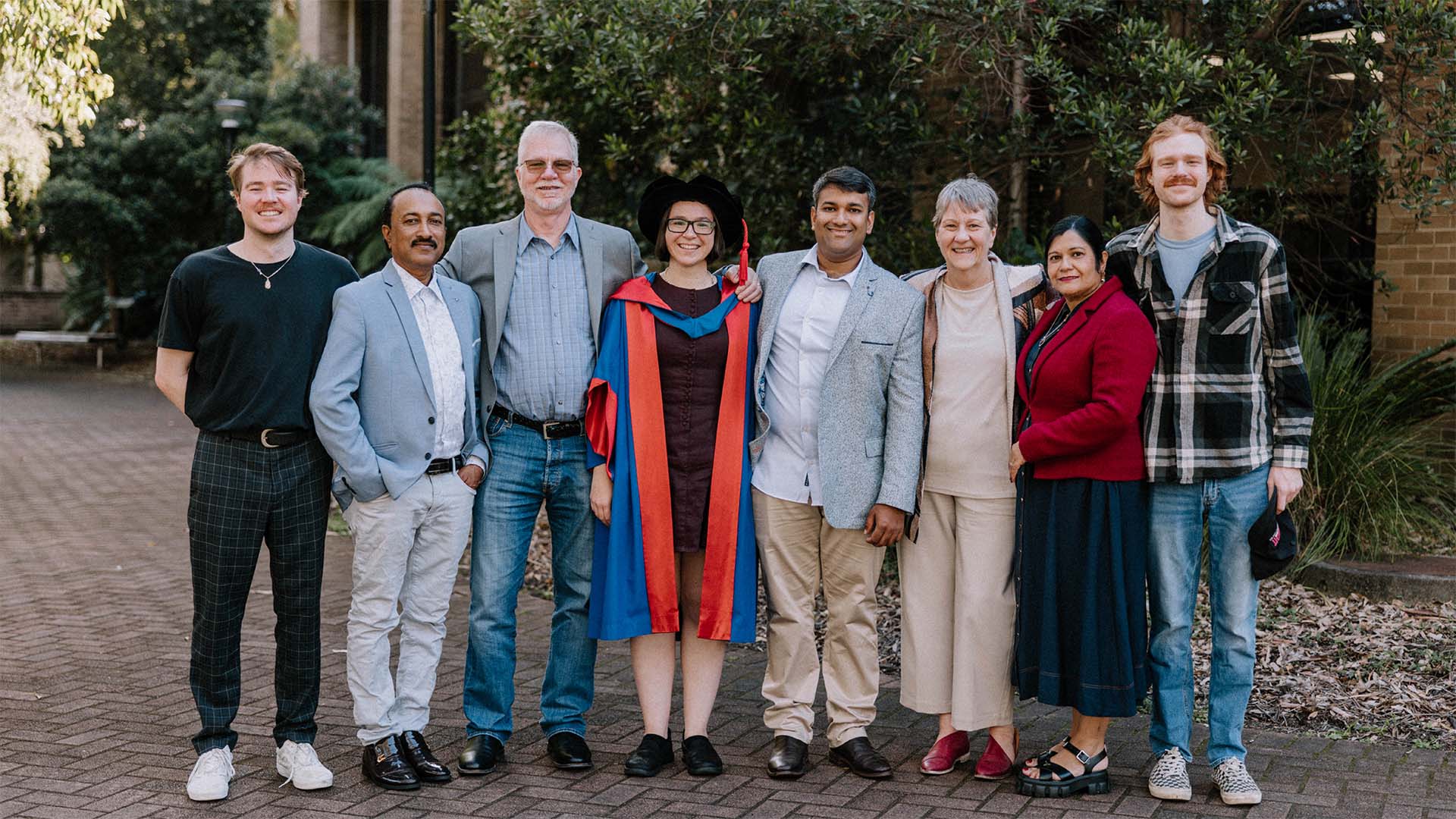
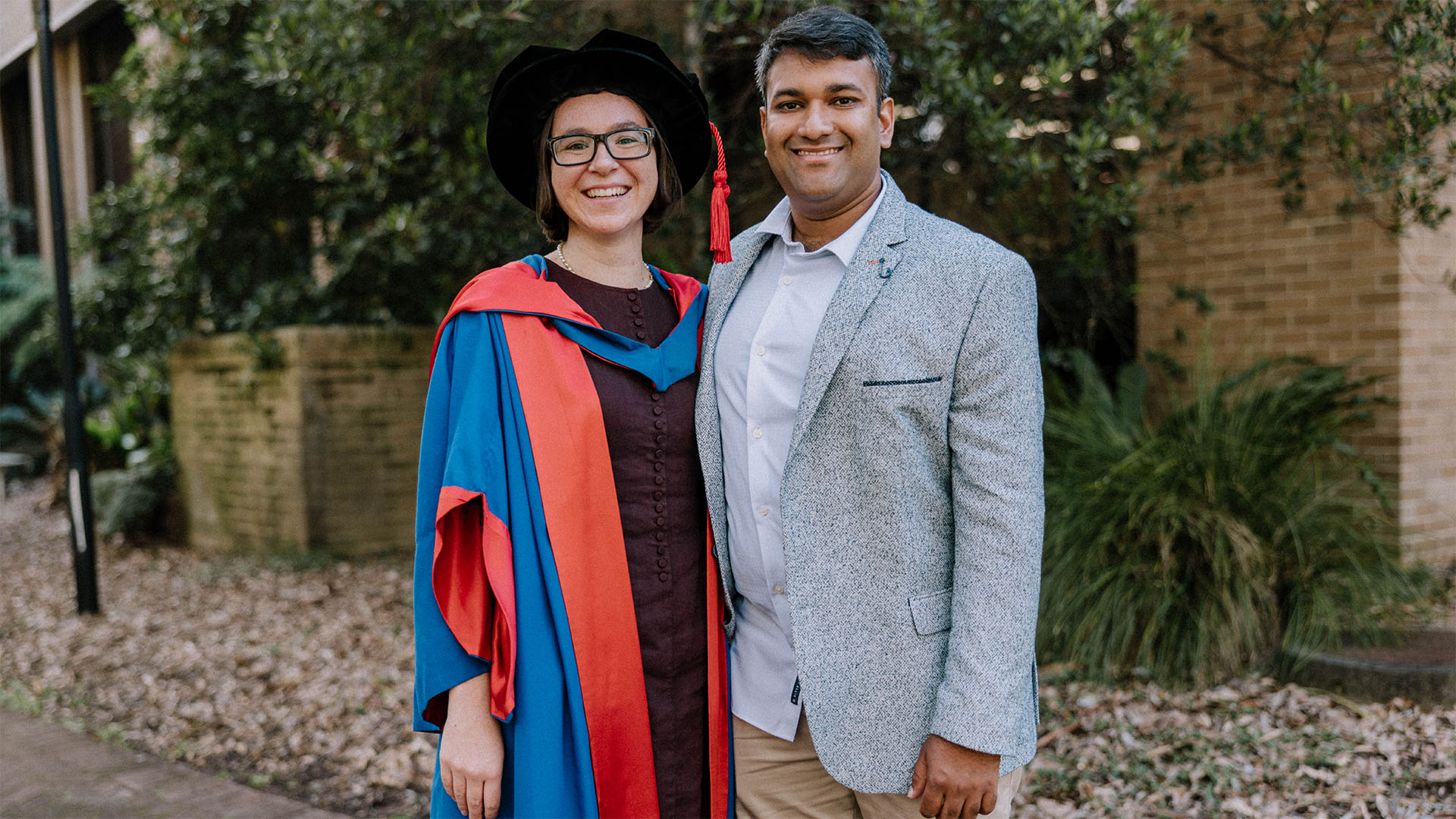
Now a Doctor of Philosophy, Molly says the achievement feels both personal and collective.
“It’s a huge milestone,” she says. “But it also took a lot of people supporting it along the way.”
For her, it is less about the title and more about what it represents, persistence, curiosity and follow-through.
What comes next
Molly is continuing her work through a postdoctoral role with CSIRO, focusing on improving space instrumentation and data analysis tools.
The goal remains the same, building technology that could one day help humans explore beyond Earth.
With renewed global interest in lunar exploration, she sees an exciting decade ahead.
“We’re going back to the Moon,” she says. “And we’re going to learn a lot more than we did last time.”
For students, especially those thinking about STEM, her advice is straightforward.
“You can do hard things,” she says. “If you’re interested in it, just keep going.”
Where it all leads
From a child staring at desert skies in Arizona to a researcher building tools for future space missions, Molly Kirkpatrick’s journey has not been linear.
But that, she says, is exactly what makes it interesting.
“It just kind of happened,” she says. “And I’m glad it did."