ÁñÁ«ÊÓÆµapp

SDG subjects and courses

UOW is committed to meaningful education about the Sustainable Development Goals (SDGs). We integrate sustainability education opportunities across our curriculum.

UOW's commitment to SDGs: a brief history

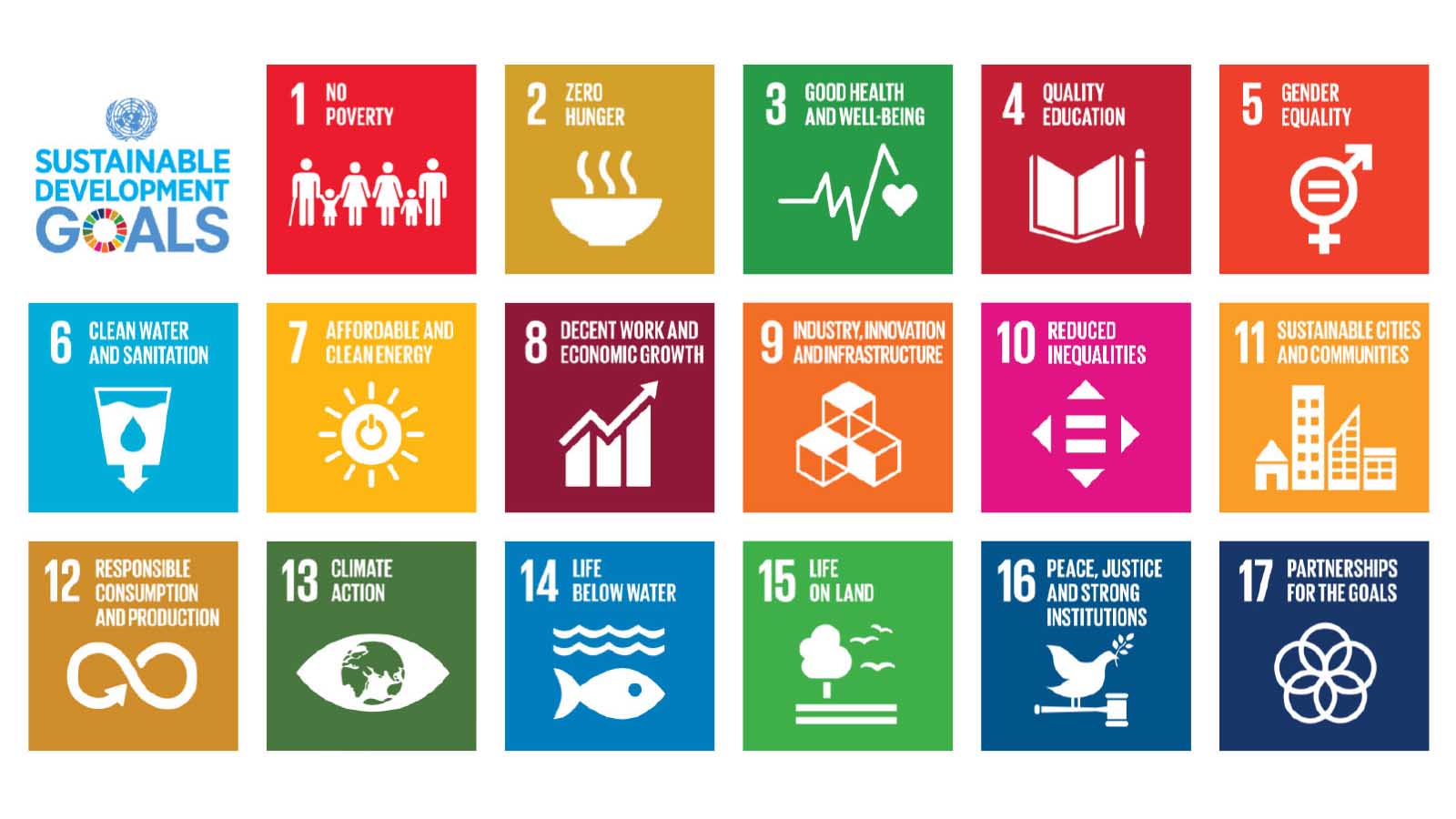
In 2015, 194 United Nations Member States adopted the 2030 Agenda for Sustainable Development, identifying 17 Sustainable Development Goals (SDGs) as an urgent call to action to protect the planet and improve the lives of all people. The 17 SDGs encompass the need to provide all citizens of the world with a sustainable planet and everyday necessities with a deadline of 2030.

In 2019, UOW signed the UN Sustainable Development Solutions Network (SDSN) Higher Education Commitment, joining an innovative group of Australian and New Zealand Universities. UOW is actively working towards incorporating these vital Global Goals into our educational offerings. This will ensure that our students are well informed global citizens that can continue to contribute to realising sustainable development throughout their studies and careers by being proactive, responsible and educated in relation to how realising the Global Goals will better the world.

Our course and subject offerings for the SDGs within each faculty are provided below.
Faculty of Science Medicine and Health

Subject description

This subject provides an introduction to the topic areas of cell biology, biochemistry, biotechnology, genetics, microbiology and immunology. During this subject you will look closely at the links between structure and function in cells and important biological molecules whilst investigating cellular division and mechanisms to control the cell cycle and prevent cancer. You will hear about techniques in genetic engineering and break throughs in biotechnology. You will learn about different microorganisms and their role in human, animal and/or plant health and explore the physiology of the immune system. Through engagement in group research projects you will develop skills in effective research and communication, teamwork, self-reflection and peer assessment whilst developing your digital literacy skills in presenting your research through PowerPoint (or similar tools) and generation of an electronic Portfolio. 

This subject is working towards:

All 17 United Nations Sustainable Development Goals. 

Faculty

Faculty of Science, Medicine and Health

Degrees

  • General schedule of electives
  • Bachelor of Environmental Science (Honours)
  • Bachelor of Environmental Science (Honours) (Dean's Scholar)
  • Bachelor of Medical and Health Sciences
  • Bachelor of Medical and Health Sciences (Honours) (Dean's Scholar)
  • Bachelor of Medicinal Chemistry (Honours)
  • Bachelor of Medicinal Chemistry (Honours) (Dean’s Scholar)
  • Bachelor of Nutrition Science
  • Bachelor of Nutrition and Dietetics (Honours)
  • Bachelor of Nutrition and Dietetics (Honours) (Dean's Scholar)
  • Bachelor of Conservation Biology (Honours)
  • Bachelor of Conservation Biology (Honours) (Dean's Scholar)
  • Bachelor of Medical Biotechnology (Honours)
  • Bachelor of Medical Biotechnology (Honours) (Dean's Scholar)
  • Bachelor of Bionanotechnology (Honours)
  • Bachelor of Bionanotechnology (Honours) (Dean’s Scholar)
  • Bachelor of Neuroscience
  • Bachelor of Pre-Medicine Science and Health
  • Bachelor of Exercise Science
  • Bachelor of Exercise Science and Rehabilitation
  • Bachelor of Science Education
  • Bachelor of Science Education (Dean's Scholar)
  • Bachelor of Marine Science
  • Bachelor of Marine Science (Honours)
  • Bachelor of Marine Science (Honours) (Dean's Scholar)
  • Bachelor of Science- SMAH
  • Bachelor of Science- SMAH (Dean's Scholar)
  • Bachelor of Science -SMAH (Honours) (Dean's Scholar)
  • Bachelor of Science -Physics
  • Bachelor of Science Advanced -Physics (Honours)

Subject description

This subject aims to provide students with a comprehensive introduction to whole organism biology, from species to populations, communities and ecosystems. Specifically, the subject explores the identity, anatomical and life-history characteristics of the main groups of organisms, their patterns of diversity across Earth, the processes of evolution and speciation, ecology and conservation biology. In addition, through a series of practical classes, the subject equips students with an understanding of the scientific process, ways in which experiments are designed and implemented, the processes of data collection and analysis and hypothesis testing. 

This subject is working towards:

Goal 13: Climate action    Goal 15: Life on Land

Faculty

Faculty of Science, Medicine and Health

Degrees

  • General schedule of electives
  • Bachelor of Science Education
  • Bachelor of Science Education (Dean's Scholar)
  • Bachelor of Environmental Science (Honours)
  • Bachelor of Environmental Science (Honours) (Dean's Scholar)
  • Bachelor of Marine Science
  • Bachelor of Marine Science (Honours)
  • Bachelor of Marine Science (Honours) (Dean's Scholar)
  • Bachelor of Conservation Biology (Honours)
  • Bachelor of Conservation Biology (Honours) (Dean's Scholar)
  • Bachelor of Science- SMAH
  • Bachelor of Science- SMAH (Dean's Scholar)
  • Bachelor of Science- SMAH (Honours) (Dean's Scholar)

Subject description

Factors and processes influencing the distribution, abundance and diversity of organisms. Population ecology: growth and regulation. Species interactions. Natural and anthropogenic disturbance. Community structure and dynamics in space and time. Sampling methods and techniques in ecology. Design and statistical analysis of sampling programs and experiments. Communicating science.

This subject is working towards:

Goal 14: Life Below Water Goal 15: Life on Land

Faculty

Faculty of Science, Medicine and Health

Degrees

  • General schedule of electives,
  • Bachelor of Environmental Sciences,
  • Bachelor of Environmental Sciences (Honours)
  • Bachelor of Environmental Sciences (Honours) (Dean's Scholar)
  • Bachelor of Conservation Biology
  • Bachelor of Conservation Biology (Honours)
  • Bachelor of Conservation Biology (Honours) (Dean's Scholar)
  • Bachelor of Marine Science
  • Bachelor of Marine Science (Honours)
  • Bachelor of Marine Science (Honours) (Dean's Scholar)
  • Bachelor of Science Education
  • Bachelor of Science Education (Dean's Scholar)
  • Bachelor of Science- SMAH
  • Bachelor of Science- SMAH (Dean's Scholar)
  • Bachelor of Science- SMAH (Honours) (Dean's Scholar)

Subject description

In this subject, we will explore health within a social context to gain an understanding of how the conditions in which people live, work and age shape their health and well-being. The course will provide an introduction to key theoretical and methodological concepts that underpin the conceptualisation of health as a social concept. We will also explore some of the important insights and challenges arising from the social determinants approach. Throughout the subject, examples will explore health inequalities as experienced by some of the most vulnerable and marginalised populations and groups, with an emphasis on Indigenous experiences from Australia and internationally. 

This subject is working towards:

Goal 10: Reduced inequalities

Faculty

Faculty of Science, Medicine and Health

Degrees

  • General schedule of electives
  • Bachelor of Social Science
  • Bachelor of Public Health

Subject description

This subject incorporates an overview of fundamental concepts in food and nutrition, as they relate to human health. This subject introduces students to the role of nutrition for health, including key components which may constitute a healthy diet, as well as methods to evaluate dietary intakes. Students will discuss the role of factors which may influence intake including interaction of biological, lifestyle and sociocultural aspects of human behaviour; changes in the nature of the food system; role of government and professional groups; and consumer interest. 

This subject is working towards:

Goal 3: Good Health and Wellbeing


Faculty

Faculty of Science, Medicine and Health

Degrees

  • General schedule of electives
  • Bachelor of Nutrition Science
  • Bachelor of Nutrition and Dietetics (Honours)
  • Bachelor of Nutrition and Dietetics (Honours) (Dean's Scholar)
  • Bachelor of Exercise Science
  • Bachelor of Pre-Medicine, Science and Health
  • Bachelor of Exercise Science and Rehabilitation


Subject description

This subject examines fundamental principles of human movement, considers nutritional demands and exercise responses to encourage a healthy lifestyle and highlights common issues and chronic conditions that can compromise health throughout the lifespan. 

This subject is working towards: 

Goal 2: Zero Hunger    Goal 3: Good Health and Wellbeing

Faculty

Faculty of the Science, Medicine and Health

Degrees

  • Bachelor of Nutrition Science
  • Bachelor of Nutrition and Dietetics (Honours)
  • Bachelor of Nutrition and Dietetics (Honours) (Dean's Scholar)
  • Bachelor of Exercise Science
  • Bachelor of Exercise Science and Rehabilitation

Subject description

Health Promotion is the process of enabling people to take control of and improve their health through behaviour change. This subject introduces students to the concept of health promotion, including existing theories and models, and demonstrates how these can be applied in particular settings (e.g. health services, work sites, schools and communities). Health promotion programs that target dietary change (ie. nutrition promotion) require measurement of dietary intake, for both planning and evaluation thereof. This subject examines the various methods used to measure dietary intake in populations and healthy individuals, as well as how to assess these measurements against national and international standards, for the purpose of developing appropriate health promotion strategies. Topics covered include validity and reliability of different dietary assessment methods and the use of different food composition databases for nutrient analyses, as well as the analysis of body composition and estimation of energy requirements, and interpretation of national survey data for monitoring and surveillance of the nutritional status of populations. 

This subject is working towards:

Goal 2: Zero Hunger    Goal 3: Good Health and Wellbeing    Goal 4: Quality Education

Faculty

Faculty of Science, Medicine and Health

Degrees

  • Bachelor of Nutrition Science
  • Bachelor of Nutrition and Dietetics (Honours)
  • Bachelor of Nutrition and Dietetics (Honours) (Dean's Scholar)

Subject description

This subject introduces students to innovation frameworks, relevant to contemporary Australian food systems, which aim to achieve a health outcome. Students will have the opportunity to evaluate specific case studies of product innovation, involving stakeholders across academia and food industry, to provide an understanding of the food product innovation process. Scientific principles will be applied to promote understanding of functional foods, nutrigenomics and genetic modification, issues concerning trends for new food delivery systems such as ready to eat meals, related food safety concerns, and the use of risk assessment frameworks in food regulation. The subject has particular emphasis on providing knowledge of how nutrition and sustainability act as drivers for health based food innovation.

This subject is working towards:

Goal 3: Good Health and Wellbeing .   Goal 9: Industry, Innovation and Infrastructure .   Goal 12: Responsible consumption and production


Faculty

Faculty of Science, Medicine and Health

Degrees

Bachelor of Nutrition and Dietetics (Honours), Bachelor of Nutrition and Dietetics (Honours) (Dean's Scholar), Bachelor of Nutrition Science


Subject description

This subject covers the key areas of community and public health nutrition, including food and nutrition monitoring and surveillance, food and nutrition systems; food and nutrition policy; program planning, development and evaluation; and principles of nutrition promotion. Issues related to advocacy for policies and programs to address public health nutrition priorities will be introduced. Current issues in Public Health Nutrition in Australia and elsewhere will be reviewed. 

This subject is working towards:

Goal 2: Zero Hunger     Goal 3: Good Health and Wellbeing    Goal 11: Sustainable Cities and Communities.  

Goal 12: Responsible consumption and production


Faculty

Faculty of Science, Medicine and Health

Degrees

Bachelor of Nutrition and Dietetics (Honours), Bachelor of Nutrition and Dietetics (Honours) (Dean's Scholar), Bachelor of Nutrition Science


Subject description

This subject introduces students to innovation frameworks, relevant to contemporary Australian food systems, which aim to achieve a health outcome. Students will have the opportunity to evaluate specific case studies of product innovation, involving stakeholders across academia and food industry, to provide an understanding of the food product innovation process. Scientific principles will be applied to promote understanding of functional foods, nutrigenomics and genetic modification, issues concerning trends for new food delivery systems such as ready to eat meals, related food safety concerns, and the use of risk assessment frameworks in food regulation. The subject has particular emphasis on providing knowledge of how nutrition and sustainability act as drivers for health based food innovation. As a 900 level subject, students will also be provided with an opportunity to provide critical analysis of the impact/s of product development on different points along the Australian food supply chain. 

This subject is working towards:

Goal 3: Good Health and Wellbeing    Goal 9: Industry, Innovation and Infrastructure    Goal 12: Responsible consumption and production


Faculty

Faculty of Science, Medicine and Health

Degrees

Master of Nutrition and Dietetics 

Subject description

This subject covers the key areas of community and public health nutrition, including food and nutrition monitoring and surveillance, food and nutrition systems; food and nutrition policy; program planning, development and evaluation; and principles of nutrition promotion. Issues related to advocacy for policies and programs to address public health nutrition priorities will be introduce. Current issues in Public Health Nutrition in Australia and elsewhere will be reviewed. 

This subject is working towards:

Goal 2: Zero Hunger   Goal 3: Good Health and Wellbeing   Goal 11: Sustainable Cities and Communities.   

Goal 12: Responsible consumption and production


Faculty

Faculty of Science, Medicine and Health

Degrees

Graduate Certificiate in Nutrition, Master of Nutrition and Dietetics

Subject description

This subject is an introduction to analytical chemistry and its application to environmental and biological systems. It provides an excellent introduction to the separation and quantification of various compounds through the application of a range of current analytical techniques. It will provide an understanding of sample compositions, sample preparation and analysis, and data interpretation using statistics. The material will be presented in lectures, workshops, and laboratory exercises.

This subject is working towards:

Goal 14: Life Below Water   Goal 15: Life on Land

Faculty

Faculty of Science, Medicine and Health

Degrees

  • General schedule of electives
  • Bachelor of Medicinal Chemistry (Honours),
  • Bachelor of Medicinal Chemistry (Honours) (Dean's Scholar)
  • Bachelor of Medical Biotechnology (Honours)
  • Bachelor of Medical Biotechnology (Honours) (Dean's Scholar)
  • Bachelor of Science Education (Dean's Scholar)
  • Bachelor of Environmental Science (Honours)
  • Bachelor of Environmental Science (Honours) (Dean's Scholar)
  • Bachelor of Science (Biomolecular Physics)
  • Bachelor of Engineering (Honours)
  • Bachelor of Science- SMAH
  • Bachelor of Science- SMAH (Dean's Scholar)
  • Bachelor of Science -SMAH (Honours) (Dean's Scholar)

Subject description

This subject provides students with an introduction to applying the techniques of analytical chemistry to environmental and biological systems. Techniques that will be covered in lectures, workshops and laboratory classes including chromatographic, spectroscopic, spectrophotometric and titrimetic methods of analysis. CHEM814 will also provide students with an understanding of the importance of sample preparation to the success of an analytical procedure, as well as approved methods of recording data and using statistics to determine the accuracy and precision of a set of analytical results.

This subject is working towards:

Goal 14: Life Below Water   Goal 15: Life on Land

Faculty

Faculty of the Science, Medicine and Health

Degrees

  • Master of Medicinal Chemistry

Subject description

The environment depends on complex interactions of chemical, physical and biological processes. These can be both natural and anthropogenic in origin. In this subject the chemistry of the environment is highlighted in a series of modules. The analysis of datasets of environmental composition will also be investigated.

This subject is working towards:

Goal 14: Life Below Water   Goal 15: Life on Land

Faculty

Faculty of Science, Medicine and Health

Degrees

  • General schedule of electives
  • Bachelor of Science- Physics
  • Bachelor of Science Advanced - Physics (Honours)
  • Bachelor of Environmental Sciences
  • Bachelor of Environmental Sciences (Honours)

Subject description

The environment depends on complex interactions of chemical, physical and biological processes. These can be both natural and anthropogenic in origin and change with time. In this subject the chemical aspects are highlighted in strands including: atmospheric chemistry, aquatic chemistry and soil chemistry. A particular focus of this subject is the drivers of atmospheric change that leads to changes in climate.

This subject is working towards:

Goal 14: Life Below Water   Goal 15: Life on Land

Faculty

Faculty of Science, Medicine and Health

Degrees

  • Master of Research

Subject description

The science of how the solid Earth works is essential to overcome great challenges presently facing our society: monitoring and mitigating climate change, protecting the natural environment and sustainably resourcing our future. This subject provides an introduction to Earth science by considering topics related to the solid Earth: deep time, our place in space, plate tectonics, the rock cycle, crystal growth, groundwater, palaeoenvironments, volcanic eruptions and magmatic plumbing systems, earthquakes, mountain building, mass extinctions, critical minerals required for a low-carbon future, landscape evolution, and archaeology. This subject consists of two parts. In the first half of this subject you will learn to ‘read’ minerals and rocks to understand the evolution of landscapes, unravelling thousands to billions of years of Earth’s history. In the second half of this subject you will apply this knowledge to conduct your own fieldwork, creating a map and technical field report to discover what the Illawarra region looked like millions of years ago. 

This subject is working towards: 

Goal 13: Climate action    Goal 14: Life Below Water    Goal 15: Life on Land     

Faculty

Faculty of Science, Medicine and Health

Degrees

  • General schedule of electives
  • Bachelor of Environmental Science (Honours)
  • Bachelor of Environmental Science (Honours) (Dean's Scholar)
  • Bachelor of Science Education
  • Bachelor of Science Education (Dean's Scholar)
  • Bachelor of Marine Science
  • Bachelor of Marine Science (Honours) (Dean’s Scholar)
  • Bachelor of Geography
  • Bachelor of Science- SMAH
  • Bachelor of Science- SMAH (Dean's Scholar)
  • Bachelor of Science- SMAH (Honours) (Dean's Scholar)
  • Bachelor of Science- ASSH
  • Bachelor of Science- ASSH (Honours) (Dean's Scholar)

Subject description

This subject enables students to explore the complex interactions between Earth’s spheres and the ways these interactions have changed over time. Using guided activities, students will develop and apply skills to analyse creatively real environmental problems using computational techniques, culminating in the construction and interpretation of an environmental model. In lectures, tutorials and practicals, concepts from Earth Systems Science will be used to examine topics including cycling of energy and carbon between spheres; the past record of global change; natural forcing and feedbacks in the Earth system; and human forcing of the Earth system. Students will also be introduced to modern methods used to understand past, present, and future global change.

This subject is working towards:

Goal 12: Responsible consumption and production   Goal 13: Climate action    Goal 14: Life Below Water

 Goal 15: Life on Land   Goal 17: Partnerships for the Goals

Faculty

Faculty of Science, Medicine and Health

Degrees

  • General schedule of electives
  • Bachelor of Marine Science
  • Bachelor of Marine Science (Honours) (Dean's Scholar)
  • Bachelor of Environmental Science (Honours)
  • Bachelor of Environmental Science (Honours) (Dean's Scholar)
  • Bachelor of Science Education
  • Bachelor of Geography
  • Bachelor of Science- ASSH
  • Bachelor of Science- ASSH (Honours) (Dean's Scholar)
  • Bachelor of Science- SMAH
  • Bachelor of Science- SMAH (Dean's Scholar)
  • Bachelor of Science- SMAH (Honours) (Dean's Scholar)
  • Bachelor of Science -Physics
  • Bachelor of Science Advanced -Physics (Honours)

Subject description

The present environment of Australia is the legacy of interactions between geological, biological and hydrological processes and human impacts. This subject links the biogeographical study of the distribution of plants and animals and their interaction with the physical environment to long-term environmental change using combined geospatial and field  Set within the context of long-term geological and climate change, topics include: the origins of Australian flora and fauna, adaptations related to climatic variability, anthropogenic effects on biota, and the response of landscapes to disturbances such as fire. The framework of the subject can be summarised as evaluating long-term controls on landscapes in conjunction with short-term dynamics to support biogeographic theory as an underpinning to learning.

This subject is working towards: 

Goal 13: Climate action    Goal 14: Life Below Water    Goal 15: Life on Land     

Faculty

Faculty of the Science, Medicine, and Health

Degrees

  • General schedule of electives
  • Bachelor of Environmental Science (Honours)
  • Bachelor of Environmental Science (Honours) (Dean's Scholar)
  • Bachelor of Geography
  • Bachelor of Science- SMAH
  • Bachelor of Science- SMAH (Dean's Scholar)
  • Bachelor of Science- SMAH (Honours) (Dean's Scholar)

Subject description

The world’s oceans cover 70% of the Earth’s surface, they regulate the global climate system, and they sustain rich ecosystems that support humankind. This multidisciplinary subject introduces the fundamentals of physical oceanography, ocean chemistry and marine biology to explain and assess key inter-related ocean processes, including through developing field, laboratory, computational and communication skills. The subject integrates ocean knowledge to evaluate solutions to major threats to the oceans from, for example, the impacts of climate change, marine pollution and ocean acidification, and including those related to UN Sustainable Development Goal #14 ‘Life below water’.

This subject is working towards:

Goal 14: Life Below Water

Faculty

Faculty of Science, Medicine and Health

Degrees

  • Bachelor of Science- SMAH
  • Bachelor of Science- SMAH (Honours) (Dean's Scholar)
  • Bachelor of Marine Science
  • Bachelor of Marine Science (Honours)
  • Bachelor of Marine Science (Honours) (Dean's Scholar)

Subject description

Every major challenge of modern life, such as ensuring energy, food, health and water security in a sustainable world has complex science and technology underpinnings that span beyond geographical barriers whilst being dependent upon often complex political and financial structures. Students in Global Challenges in Science will investigate projects related to such modern challenges in the context of the United Nations Sustainable Development Goals. Student learning in this subject is facilitated through engaging online material, in combination with face-to-face lectures and workshop classes.

This subject is working towards:

Goal 13: Climate action   Goal 14: Life Below Water

Faculty

Faculty of Science, Medicine and Health

Degrees

  • Bachelor of Science- SMAH
  • Bachelor of Science- SMAH (Dean's Scholar)
  • Bachelor of Science- SMAH (Honours)
  • Bachelor of Science- SMAH (Honours) (Dean's Scholar)

Subject description

This subject broadly explores the complex topic of climate change. Within the subject, we will examine the physical and chemical processes that influence Earth’s climate and energy balance and the impact of anthropogenic green- house gases. The evidence of climate change within Earth’s physical and biological systems will be investigated. We will then examine the impacts/threats of climate change to human systems, such as to infrastructure and food production. The human behaviours that have driven climate change will be explored, including energy production, agriculture, resources use and population. We will also examine how society has responded to climate change science, that is, how societies adopt or ignore scientific evidence and evaluate how we can manage and adjust to future climate conditions.

This subject is working towards:

Goal 7: Affordable and Clean Energy   Goal 12: Responsible consumption and production   Goal 13: Climate action

Goal 15: Life on Land

Faculty

Faculty of Science, Medicine and Health

Degrees

  • General schedule of electives
  • Bachelor of Science- SMAH
  • Bachelor of Science- SMAH (Dean's Scholar)
  • Bachelor of Science- SMAH (Honours) (Dean's Scholar)
  • Bachelor of Science Education
  • Bachelor of Science Education (Dean's Scholar)

Subject description

Remote sensing uses sensors mounted on satellites, planes, or drones to collect spectral data for earth observation. Sensors ‘see’ information well outside the range of the human eye. Applications you may be familiar with include weather, forest health, fisheries monitoring, glacial melt, habitat destruction, natural disasters, and human refugee displacement. Newer applications are constantly emerging, with some less well-known uses including cemetery inventories, tax-evasion (unapproved construction), insurance compliance (swimming pool fences), tracing disease outbreaks (population and transport patterns in Wuhan before Oct ’19), monitoring oil levels in storage tanks linked to the stock exchange, and journalists using satellite data as source and proof for stories.

This subject is working towards:

Goal 3: Good Health and Wellbeing   Goal 11: Sustainable Cities and Communities.   Goal 15: Life on Land

Goal 16: Peace, justice and strong institutions

Faculty

Faculty of Science, Medicine and Health

Degrees

  • General schedule of electives
  • Bachelor of Science- SMAH
  • Bachelor of Science- SMAH (Dean's Scholar)
  • Bachelor of Science- SMAH (Honours) (Dean's Scholar)
  • Bachelor of Conservation Biology (Honours)
  • Bachelor of Conservation Biology (Dean's Scholar)


Subject description

Fundamentals of Nursing 1 focuses on the development of the role and clinical skills of the registered nurse when promoting, maintaining, and supporting a person’s health and wellbeing across the lifespan. Students will be able to develop the foundational clinical skills in a simulated clinical environment to enable the further development of more complex skills in a health care setting. This subject will also provide foundational knowledge and skills for sourcing, appraising and reflecting on literature and information sources used in the health care environment to ensure the uptake of evidence-based practice. Students will build on their clinical and communication skills to ensure safe people-centred care, whilst recognising the importance of caring for people of different values, beliefs and cultures. .

This subject is working towards:

  • 3: Good Health and Wellbeing
  • 12: Responsible Consumption and Production

Faculty

Faculty of Science, Medicine and Health

Subject description

In SNUG102 students will explore the historical development of nursing to gain an understanding of the professionalisation of the modern-day nurse. The professional identity of the nurse and how the nurse contributes to the quality and safety of practice will be explored. The contemporary policies, guidelines and standards set by the Nursing and Midwifery Board of Australia (NMBA) and the Australian Health Practitioner Regulation Agency (AHPRA) will be outlined, as well as legal and ethical considerations relevant to the profession. In addition, an overview of research processes, evidence-based practice and academic writing will be introduced to enable students to explore how knowledge contributes to nursing practice. .

This subject is working towards:

  • 5: Gender Equity
  • 10: Reduced Inequalities
  • 16: Peace, Justice and Strong Institutions

Faculty

Faculty of Science, Medicine and Health

Subject description

This subject seeks to explore the issues, challenges and support for older people in Australia. A focus of the subject is to develop the student's awareness and knowledge of ageing, the physical, emotional and mental health concerns of the older adult and their special nursing needs. It will examine key issues concerning health and illness and essential elements of planning care so that students can support the client and their significant others in the provision of safe, effective and individualised care. .

This subject is working towards:

  • 2: Zero Hunger
  • 3: Good Health and Wellbeing
  • 10: Reduced Inequalities

Faculty

Faculty of Science, Medicine and Health

Subject description

This subject introduces students to concepts and principles of Primary Health Care, Health Promotion and Health Education including contexts and strategies for implementing Primary Health Care. Professional roles in the delivery of care within a Primary Health Care framework will be explored, including highlighting cultural safety concerns and public health initiatives for countries and population groups for poverty alleviation.

This subject is working towards:

Goal 3: Good Health and Wellbeing  Goal 10: Reduced inequalities

Faculty

Faculty of Science, Medicine and Health

Degrees

  • Bachelor of Nursing

Subject description

Bioscience 1 introduces core concepts and terminology related to the normal structure, function and homeostasis of the human body. Taking a lifespan approach, students are introduced to selected body systems and begin to describe the contribution these systems make to activities of living, health and wellbeing. .

This subject is working towards:

  • 2: Zero Hunger
  • 3: Good Health and Wellbeing
  • 4: Quality Education

Faculty

Faculty of Science, Medicine and Health

Subject description

Fundamentals of Nursing 2 focuses on the development of the role and clinical skills of the registered nurse when promoting, maintaining, and supporting a person’s health and wellbeing across the lifespan. This subject builds on from knowledge acquired in SNUG101 - Fundamentals of Nursing 1 and prepares nursing students with a developing level of experience to critically think and promote evidence-based practice within a simulated clinical environment. Students will build on their clinical and communication skills to ensure safe people-centred care, whilst recognising the importance of caring for people of different values, beliefs and cultures. .

This subject is working towards:

  • 3: Good Health and Wellbeing
  • 6: Clean Water and Sanitation
  • 12: Responsible Consumption and Production
  • 13: Climate Action
  • 14: Life Below Water

Faculty

Faculty of Science, Medicine and Health

Subject description

Bioscience 2 builds on foundational knowledge from Bioscience 1, reinforcing previously studied body systems while introducing new systems. Taking a lifespan approach, students explore how these systems contribute to activities of living, health, and wellbeing. The subject examines the influence of genetics, environmental factors, and lifestyle on health, ageing, and disease. Students are also introduced to microbiology and infection control, including the chain of infection, modes of transmission, and prevention strategies in healthcare settings. Additionally, the subject explores the body’s responses to ageing, infection, injury, and disease. .

This subject is working towards:

  • 3: Good Health and Wellbeing
  • 4: Quality Education
  • 13: Climate Action

Faculty

Faculty of Science, Medicine and Health

Subject description

Professional Experience Placement (PEP) 1 focuses on the development of the role and clinical skills of the registered nurse when assessing and caring for people across a variety of healthcare settings (medical/surgical and aged-care). This subject enables students to draw on their previous learning in all subjects and integrate practical/theoretical knowledge together with evidence-based practice principles gained in the course to date. Students will build on their communication skills to promote interdisciplinary collaborations and people-centred care, whilst recognising the importance of caring for people of different values, beliefs and cultures. Students will consolidate their knowledge through clinical experience comprising 160 hours. .

This subject is working towards:

  • 3: Good Health and Wellbeing
  • 4: Quality Education
  • 5: Gender Equity
  • 6: Clean Water and Sanitation
  • 10: Reduced Inequalities
  • 12: Responsible Consumption and Production
  • 14: Life Below Water

Faculty

Faculty of Science, Medicine and Health

Subject description

Acute Care Nursing focuses on the development of the role and clinical skills of the registered nurse when promoting, maintaining, and supporting a person’s health and wellbeing across the lifespan. This subject builds on from knowledge acquired in SNUG112 - Fundamentals of Nursing 2 and prepares nursing students with a developing level of experience to critically think and promote evidence-based practice within a simulated clinical environment. Students will build on their clinical and communication skills to ensure safe people-centred care, whilst recognising the importance of caring for people of different values, beliefs and cultures. .

This subject is working towards:

  • 1: No Poverty
  • 3: Good Health and Wellbeing
  • 5: Gender Equity
  • 10: Reduced Inequalities
  • 12: Responsible Consumption and Production
  • 13: Climate Action
  • 14: Life Below Water

Faculty

Faculty of Science, Medicine and Health

Subject description

This subject builds on skills developed in first year and will explore how research processes and knowledge inform nursing practice. Students will develop evidence appreciation and application skills. They will develop critical analysis skills to facilitate the translation of quality research findings into their practice. Students will advance their knowledge of data collection and reporting in the Australian healthcare system and consider implications for healthcare practice. In addition, students will expand their skills in personal and professional reflection to assist in identifying, accessing and evaluating clinically relevant literature and other forms of evidence and construct critical thinking and logical argument.

This subject is working towards:

  • 4: Quality Education
  • 16: Peace, Justice and Strong Institutions

Faculty

Faculty of Science Medicine and Health

Subject description

Continuing Care focuses on the development of the role and clinical skills of the registered nurse when promoting, maintaining, and supporting a person with a chronic condition, disability, or who requires rehabilitation or palliative care. This subject enables students to draw on their previous learning and prepares nursing students with a developing level of experience to critically think and promote evidence-based practice within a simulated clinical environment. Students will build on their clinical and communication skills to ensure safe people-centred care, whilst recognising the importance of caring for people of different values, beliefs and cultures.

Learn more about SNUG205 Continuing Care

This subject is working towards:

  • 3: Good Health and Wellbeing
  • 4: Quality Education
  • 6: Clean Water and Sanitation
  • 12: Responsible Consumption and Production
  • 13: Climate Action
  • 14: Life Below Water

Faculty

Faculty of Science, Medicine and Health

Subject description

The subject will explore how models of practice impact on people with lived experience of mental illness as well as their families/carers. Students will be introduced to a number of theoretical approaches, which offer ways of understanding the nature of mental health, mental illness and mental disorders. The science and art of psychiatric/mental health nursing care will be explored. The subject will critique the historical development of psychiatric/mental health nursing, as well as contemporary discourses with reference to the psychological, social, bio/medical, cultural and spiritual explanations of mental illness and disorder.

Find out more about .

This subject is working towards:

  • 1: No Poverty
  • 3: Good Health and Wellbeing
  • 10: Reduced Inequalities

Faculty

Faculty of Science, Medicine and Health

Subject description

Students in SNUG207 will be challenged to consider the impact of white privilege in the health outcomes of Aboriginal and Torres Strait Islander people today. This will include an exploration of the history of invasion and colonisation of Australia and current relevant health policy. Health promotion for Aboriginal and Torres Strait Islander people will be considered from a strengths based approach along with the impacts of positive partnerships between them and nonindigenous healthcare care providers. Analysis of the role of registered nurses both from an Aboriginal and Torres Strait Islander and non-indigenous perspective will be undertaken as part of the subject. Cultural safety will be explored and applied.. Find out more about

This subject is working towards:

  • 1: No Poverty
  • 3: Good Health and Wellbeing
  • 10: Reduced Inequalities
  • 14: Life Below Water
  • 15: Life on Land
  • 16: Peace, Justice and Strong Institutions
  • 17: Partnerships for the Goals


Faculty

Faculty of Science, Medicine and Health

Subject description

In this subject students will gain knowledge of the complex pathophysiological changes that occur to the body as a result of common disease processes across the lifetime. Principles of pharmacology and treatments to manage these specific diseases will also be explored. This subject has been designed to link with SNUG201 – Acute Care Nursing to provide not only a deep understanding of the disease process but at the same time ensuring a holistic and person-centred approach to caring for an unwell person. This will be achieved through shared case studies that explore differing aspects of care. .

This subject is working towards:

  • 3: Good Health and Wellbeing
  • 14: Life Below Water         

Faculty

Faculty of Science, Medicine and Health

Subject description

Professional Experience Placement 2 focuses on the development of the role and clinical skills of the registered nurse when assessing and caring for people within a variety of healthcare settings (medical/surgical/mental health). This subject enables students to draw on their previous learning in all subjects and integrate practical/theoretical knowledge together with evidence-based practice principles gained in the course to date. Students will build on their communication skills to promote interdisciplinary collaborations and people-centred care, whilst recognising the importance of caring for people of different values, beliefs and cultures. Students will consolidate their knowledge through clinical experience comprising 160 hours. Find out more about .

This subject is working towards:

  • 3: Good Health and Wellbeing
  • 6: Clean Water and Sanitation
  • 10: Reduced Inequalities
  • 12: Responsible Consumption and Production
  • 13: Climate Action
  • 14: Life Below Water            

Faculty

Faculty of Science, Medicine and Health

Subject description

Professional Experience Placement 3 focuses on the development of the role and clinical skills of the registered nurse when assessing and caring for people across the lifespan within a variety of healthcare settings (medical/surgical and mental health). This subject enables students to draw on their previous learning in all subjects and integrate practical/theoretical knowledge together with evidence-based practice principles gained in the course to date. Students will build on their communication skills to promote interdisciplinary collaborations and people-centred care, whilst recognising the importance of caring for people of different values, beliefs and cultures. Students will consolidate their knowledge through clinical experience comprising 160 hours. Find out more about SNUG292    Professional Experience Placement 3.

This subject is working towards:

  • 3: Good Health and Wellbeing
  • 6: Clean Water and Sanitation
  • 12: Responsible Consumption and Production
  • 13: Climate Action
  • 14: Life Below Water


Faculty

Faculty of Science, Medicine and Health

Subject description

This subject builds from content learned throughout the previous two years and strives to equip students with the skills to recognise and make effective clinical decisions where individuals across the lifespan experience deterioration, including physical and behavioural changes.  Students will develop clinical skills relevant to the management of people who are deteriorating. Students will be introduced to the findings of recent inquiries into health care systems and be familiar with ‘between the flags’, the concepts of rapid response, clinical leadership and the role of interdisciplinary health teams in caring for the deteriorating person. Students will explore the required skills to think, act and communicate quickly under pressure in a person-centred approach. .

This subject is working towards:

  • 3: Good Health and Wellbeing
  • 4: Quality Education
  • 6: Clean Water and Sanitation
  • 12: Responsible Consumption and Production
  • 13: Climate Action
  • 14: Life Below Water         

Faculty

Faculty of Science, Medicine and Health

Subject description

Leadership has been identified as critical to the provision of healthcare. Leadership in health is not aligned with role. This subject explores the significance of leadership for Registered Nurses to the provision of person-centred, compassionate care. Students will examine the impact of a person-centred leader in healthcare. Aspects will include healthcare espoused values, teams, culture, governance, change, personal leadership and followership, and wellbeing. This subject links with SNUG303 and will build capacity for the student as a future RN.

Find out more about .

This subject is working towards:

  • 3: Good Health and Wellbeing
  • 8: Decent Work and Economic Growth
  • 17: Partnerships for the Goals

All 17 United Nations Sustainable Development Goals. 


Faculty

Faculty of Science, Medicine and Health

Subject description

This subject explores the process of transition from student to professional practitioner and provides students with an opportunity to critically evaluate their preparedness for registered nurse practice. Students will explore the factors that influence the transitional experience and develop self-care strategies to assist their transition to the workforce. As an emergent professional, students will further develop their understanding of the link between practice and the professional regulatory environment and build capacity to meet their professional responsibilities as registered nurses. Furthermore, the nurse as professional will be examined with an emphasis on using values and ethical decision-making to promote ethical care and effect workplace cultural change.

This subject is working towards:

  • 3: Good Health and Wellbeing
  • 8: Decent Work and Economic Growth
  • 17: Partnerships for the Goals            

Faculty

Faculty of Science, Medicine and Health

Subject description

This capstone subject will provide students with an opportunity to consolidate their knowledge, skills and attributes required for safe, competent practice as beginning registered nurses. Students will explore global issues in healthcare and how they can impact local change as registered nurses. Students will propose and complete a capstone learning project through which they demonstrate their abilities to integrate, analyse, synthesise and apply knowledge and skills relevant to their professional interests. The project will focus on a relevant scholarly, professional or practice issue \that impacts their local community utilising the United Nations Sustainable Development Goals as a framework. Students will complete a critical reflection of the work undertaken during their degree that includes their state of readiness to undertake the role of a registered nurse within the workplace and how they may impact local and global challenges within this role. 

This subject is working towards:

All 17 United Nations Sustainable Development Goals.


Faculty

Faculty of Science, Medicine and Health

Degrees

Bachelor of Nursing, Bachelor of Nursing (Conversion)

This subject aims to consolidate and extend students' understanding of a range of mental health issues and their associated care and treatment approaches in any setting. Through the exploration of theory and practice frameworks, students will also develop their clinical skills in working alongside people with a lived experience of mental illness to nurture recovery-orientated practice.

Learn more about

This subject is working towards:

  • 3: Good Health and Wellbeing
  • 9: Industry, Innovation and Infrastructure

Faculty 

Faculty of Science, Medicine and Health

Subject description

This subject will enable students to explore an area of nursing specialty in greater detail. This elective focuses on critical care nursing. The subject introduces the student to the assessment and management of critically ill patients across the lifespan. Students will be introduced to the complexity of critical care nursing in both the Emergency Department and the critical care environment. There will be an emphasis on the application of theory to practice by using case-based scenarios. From a theoretical perspective, students will examine nursing care and management of the critically ill person and their family, as well as developing a beginning knowledge of a range of therapies used in critical care. This subject will be conducted online so students will learn in virtual communities with other students who have selected the same specialty.
Find out more about .

This subject is working towards:

  • 3: Good Health and Wellbeing
  • 4: Quality Education

Faculty

Faculty of Science, Medicine and Health

Subject description

This subject will enable students to explore an area of nursing specialty in greater detail. This elective focuses on paediatric nursing and consider this from a variety of clinical settings including critical care, acute care and the primary health care. The subject introduces the student to the application of the nursing process when caring for infants, children and adolescents. Students will be introduced to the challenges of paediatric nursing with an emphasis on growth and development, and the legal and ethical responsibilities of the nurse and how these affect practice across age groups. There will be an emphasis on the application of family-centred theory to practice by using case based scenarios. From a theoretical perspective, students will examine the critical and clinical situation of the care in alignment with the current social and other health issues relating to infants, children and adolescents. Practically, students will build on their existing knowledge to further develop their understanding of evidence-based interventions to promote optimal wellbeing and development of the family unit. This subject will be conducted online so students will learn in virtual communities with other students who have selected the same specialty. .

This subject is working towards:

  • 1: No Poverty
  • 2: Zero Hunger
  • 3: Good Health and Wellbeing
  • 4: Quality Education
  • 5: Gender Equity
  • 6: Clean Water and Sanitation
  • 7: Affordable and Clean Energy
  • 8: Decent Work and Economic Growth
  • 9: Industry, Innovation and Infrastructure
  • 10: Reduced Inequalities
  • 11: Sustainable Cities and Communities
  • 12: Responsible Consumption and Production
  • 13: Climate Action
  • 14: Life Below Water
  • 15: Life on Land
  • 16: Peace, Justice and Strong Institutions
  • 17: Partnerships for the Goals

All 17 United Nations Sustainable Development Goals. 


Faculty

Faculty of insert name

Subject description

This subject builds on knowledge gained in Pathophysiology and Pharmacology for Nurses 1 by focusing on the pathophysiologic processes and pharmacologic management of common non-communicable diseases affecting the musculoskeletal, gastrointestinal, renal and nervous systems. Students will also gain knowledge of the pathophysiology and pharmacologic management of sepsis in this subject.
The pathophysiology and long-term pharmacologic management of communicable diseases such as Human Immunodeficiency Virus and tuberculosis will also be explored, enabling students to plan a person-centred approach to care for an unwell person. Knowledge gained in Pathophysiology and Pharmacology for Nurses 1 in relation to Quality Use of Medicines will be built on by addressing antimicrobial stewardship.

Find out more about

This subject is working towards:

  • 3: Good Health and Wellbeing
  • 4: Quality Education
  • 6: Clean Water and Sanitation
  • 14: Life Below Water          

Faculty

Faculty of Science, Medicine and Health

Subject description

Professional Experience Placement 4 focuses on the development of the role and clinical skills of the registered nurse when assessing and caring for people across the lifespan within a variety of healthcare settings (acute care). This subject enables students to draw on their previous learning in all subjects and integrate practical/theoretical knowledge together with evidence-based practice principles gained in the course to date. Students will build on their communication skills to promote interdisciplinary collaborations and people-centred care, whilst recognising the importance of caring for people of different values, beliefs and cultures. Students will consolidate their knowledge through clinical experience comprising 160 hours.
Find out more about

This subject is working towards:

  • 3: Good Health and Wellbeing
  • 4: Quality Education
  • 6: Clean Water and Sanitation
  • 10: Reduced Inequalities
  • 12: Responsible Consumption and Production
  • 13: Climate Action
  • 14: Life Below Water

Faculty

Faculty of Science, Medicine and Health

Subject description

Professional Experience Placement 5 focuses on the development of the role and clinical skills of the registered nurse when assessing and caring for people within a variety of healthcare settings (acute care and specialisation). This subject enables students to draw on their previous learning in all subjects and integrate practical/theoretical knowledge together with evidence-based practice principles gained in the course to date. Students will build on their communication skills to promote interdisciplinary collaborations and people-centred care, whilst recognising the importance of caring for people of different values, beliefs and cultures. Students will consolidate their knowledge through clinical experience comprising 200 hours.
Find out more about

This subject is working towards:

  • 3: Good Health and Wellbeing
  • 4: Quality Education
  • 6: Clean Water and Sanitation
  • 10: Reduced Inequalities
  • 12: Responsible Consumption and Production
  • 13: Climate Action
  • 14: Life Below Water           

Faculty

Faculty of Science, Medicine and Health

SDGengage

UOW's new online short course, SDGengage, explains the United Nations Sustainable Development Goals (SDGs), their history and impact, how they are implemented and how they are relevant to you. Open to all community members.

Faculty of Arts, Society and Business

About the subject

ACCY200 builds on the knowledge and skills students have acquired in both ACCY121 and ACCY122. In this subject, students will apply accounting standards and the conceptual framework to prepare and analyse general-purpose financial reports and related disclosures. This subject also develops the skills of professional judgement required to evaluate accounting practice in the changing legal and economic environment.

For more information refer to the

Sustainable Development Goals

This subject is working towards:

Courses, majors and minors

  • Bachelor of Professional Accounting
  • Accountancy for BBus
  • Accountancy for BBus at UOWD
  • Accountancy

About the subject

This subject builds on ACCY200 to understand and evaluate advanced accounting techniques. Students will apply critical and analytical skills to the interpretation and application of accounting standards in complex business arrangements. In this, subject students will have the opportunity to acquire the skills necessary for professional practice, including industry-based experience.

For more information refer to the .

Sustainable Development Goals

This subject is working towards:

Courses, majors and minors

  • Bachelor of Professional Accounting
  • Accountancy for BBus
  • Accountancy for BBus at UOWD

About the subject

The subject develops an understanding of the use of management accounting information for product costing, planning and control and decision-making. Students will apply a variety of quantitative tools and techniques to communicate relevant information to management. In this subject, students will apply ICT to analyse data and evaluate information for the preparation of management reports.

For more information refer to the .

Sustainable Development Goals

This subject is working towards:

Courses, majors and minors

  • Bachelor of Professional Accounting
  • Accountancy for BBus
  • Accountancy for BBus at UOWD
  • Accountancy

About the subject

This subject introduces the students to accounting information systems and core business processes in an e-business environment. The subject addresses essential issues relating to information systems, such as the organisation, management and reporting of financial and non-financial data and information, and the internal control systems required to deal with risks, especially in core transaction cycles. The subject develops a critical understanding of the impact of new technology in transforming the value chain of business processes in relation to accounting, and the role of accountants in contemporary enterprise systems.

For more information refer to the

Sustainable Development Goals

This subject is working towards:

Courses, majors and minors

  • Accountancy for BBus
  • Bachelor of Professional Accounting
  • Accountancy for BBus at UOWD

About the subject

This subject explores accounting for sustainability and accountability for social and environmental impacts across a range of organisations. It critically evaluates the current methods of sustainability accounting with respect to an ever-changing business and political landscape. This includes reporting and governance arrangements related to an organisation’s social and environmental impacts such as accounting for carbon and water, climate change, social responsibility, and modern slavery. Students will become equipped with the tools to critique and make decisions regarding business performance within a sustainability context.

For more information refer to the .

Sustainable Development Goals

This subject is working towards:

Courses, majors and minors

  • Bachelor of Professional Accounting
  • Sustainable Business  for BBus
  • Sustainable Business

About the subject

In this subject, students will consolidate and integrate disciplinary knowledge to prepare for professional practice. This capstone experience will require students to critically evaluate current global developments in accounting, evaluate risks and opportunities and apply theory to explain accounting in its broader socio- political context.

For more information refer to the .

Sustainable Development Goals

This subject is working towards all 17 United Nations Sustainable Development Goals.

Courses, majors and minors

  • Bachelor of Professional Accounting
  • Accountancy for BBus
  • Accountancy for BBus at UOWD

About the subject

This subject provides students with an opportunity to integrate and apply their accounting and taxation knowledge in a professional practice environment. Through participation in a work integrated learning (WIL) activity, students will engage with real clients under the supervision of qualified professionals, gaining practical experience in tax advisory and assistance. The subject focuses on developing key professional skills such as critical thinking, problem-solving, and effective communication, while also enhancing students’ understanding of the diverse roles accountants play in the industry. By the end of the subject, students will be equipped to make informed decisions and contribute to a professional accounting and taxation context.

For more information refer to the .

Sustainable Development Goals

This subject is working towards:

Courses, majors and minors

  • Bachelor of Professional Accounting

About the subject

This subject provides an understanding of advanced management accounting techniques, in particular how they support organisational strategy, performance, management control and decision making processes. Students will develop skills to evaluate and communicate relevant information to a range of organisational stakeholders.

For more information refer to the .

Sustainable Development Goals

This subject is working towards:

Courses, majors and minors

  • Bachelor of Professional Accounting
  • Accountancy for BBus
  • Accountancy for BBus at UOWD

About the subject

This subject examines the nature and purpose of audit and assurance of general purpose financial reports and the regulatory and professional environment in which it operates. Topics include planning and risk assessment, the collection and evaluation of audit evidence and communication of a professional audit opinion.

For more information refer to the .

Sustainable Development Goals

This subject is working towards:

Courses, majors and minors

  • Bachelor of Professional Accounting
  • Accountancy for BBus
  • Accountancy for BBus at UOWD

About the subject

This subject explores the skills, strategies and professional expectations of collaborative media production. An examination of relevant principles, practices and industry case studies provides the basis for teams of students with different media production expertise to collaborate in the development of common projects.

For more information refer to the .

Sustainable Development Goals

This subject is working towards:

Courses, majors and minors

  • Bachelor of Communication and Media
  • Bachelor of Arts - Bachelor of Communication and Media
  • Bachelor of Communication and Media - Bachelor of Laws (Honours)
  • Bachelor of Communication and Media - Bachelor of Laws
  • Marketing Communication and Advertising
  • Screen Media Production
  • Screen Media Production for BCM at UOWD
  • Digital and Social Media for BCM at UOWD
  • Visual Communication Design for BCM at UOWD
  • Marketing Communication and Advertising for BCM at UOWD
  • Visual Communication Design
  • Digital and Social Media

About the subject

The subject explores responsible and ethical business in contemporary organisations as they relate to business practice and sustainable development. It provides students with theoretical and philosophical understandings of ethics to critically evaluate individual and organisational responses to sustainable development in organisational decision-making. The topics covered will include a focus on ethical and social responsibility in business.

Key challenges addressed include the environment and climate change, human rights, bribery prevention and governance, sustainable development, globalisation and technology. Students will examine these challenges in contemporary organisational contexts from a variety of theoretical and practical perspectives, and the United Nations’ Sustainable Development Goals.

For more information refer to the .

Sustainable Development Goals

This subject is working towards:

Courses, majors and minors

  • Bachelor of Economics and Finance - Bachelor of Laws
  • Bachelor of Economics and Finance - Bachelor of Laws (Honours)
  • Bachelor of Business
  • Bachelor of Business Administration
  • Diploma in Business Administration - Exit Degree
  • Associate Degree in Business - Exit Degree
  • Bachelor of Business - Bachelor of Laws
  • Bachelor of Business - Bachelor of Laws (Honours)
  • Bachelor of Psychological Science - Bachelor of Business
  • Bachelor of Arts (Psychology) - Bachelor of Business
  • Bachelor of Arts - Bachelor of Business
  • Bachelor of Communication and Media - Bachelor of Business
  • Bachelor of Creative Arts - Bachelor of Business
  • Bachelor of International Studies - Bachelor of Business
  • Bachelor of Psychology (Honours) - Bachelor of Business
  • Bachelor of Science (SMAH) - Bachelor of Business
  • Bachelor of Engineering (Honours) - Bachelor of Business
  • Bachelor of Business Administration - UOWD
  • Bachelor of Business - UOWD
  • Bachelor of Business - TAFE Advanced Diploma of Event Management
  • Bachelor of Business - TAFE Advanced Diploma of Hospitality Management
  • Bachelor of Business - TAFE Advanced Diploma of Travel and Tourism Man
  • Bachelor of Business Analytics
  • Bachelor of Economics and Finance
  • Bachelor of Business Administration - UOWM Dual Award
  • Sustainable Business  for BBus
  • Sustainable Business
  • Bachelor of Engineering (Honours) (Single Major)

About the subject

This subject gives students the tools and frameworks to understand, create and action unique innovative ideas to super wicked problems using the globally-recognised United Nations Sustainable Development Goals. Through the use of systems thinking principles, students will apply an interconnected approach to tackling societal, biosphere and economic global challenges. Students will have the opportunity to collaborate with ÁñÁ«ÊÓÆµapp students from across UOW to brainstorm ideas, workshop ideas with industry professionals and pitch ideas to experts.
For more information refer to the .


Sustainable Development Goals

This subject is working towards all 17 United Nations Sustainable Development Goals.

Courses, majors and minors

  • Bachelor of Business
  • Diploma in Business Administration - Exit Degree
  • Associate Degree in Business - Exit Degree
  • Bachelor of Business - TAFE Advanced Diploma of Event Management
  • Bachelor of Business - TAFE Advanced Diploma of Hospitality Management
  • Bachelor of Business - TAFE Advanced Diploma of Travel and Tourism Man
  • International Business for BBus
  • International Business for BBus at UOWD
  • Sustainable Business  for BBus
  • International Business
  • Sustainable Business
  • Entrepreneurship

About the subject

This subject will introduce students to the changes that business need to manage in driving the transition towards net zero, focusing on sustainable business strategy, innovation and leadership. Students will be encouraged to explore the role that they play in combating climate change through building business models that are resilient and provide shared value in the net-zero, resource-efficient economy of the 21st century.

For more information refer to the

Sustainable Development Goals

This subject is working towards:

Courses, majors and minors

  • Bachelor of Business Administration - UOWM Dual Award
  • International Business for BBus at UOWD
  • Sustainable Business  for BBus
  • Sustainable Business
  • International Business for BBus
  • Public Relations for BBus
  • Sport Marketing and Management

About the subject

This subject provides the theoretical foundation of modern microeconomic analysis by building upon the basic concepts covered in introductory microeconomics. Topics include the free market system and its operation under market regulation, and the imposition of excise taxes and subsidies. The theory of consumer behaviour is developed and applied to household choice problems, the index number problem, methods of taxation, and intertemporal choice. The theory of production and its costs is discussed, and used to develop models of optimal choice by producers in the long run and short run, including optimal output expansion, optimal input substitution, responses to technological change, and economies and diseconomies of scale. Models of market organization are studied with emphasis on monopoly power, oligopoly (including models of Nash, Cournot, Bertrand, and Stackelburg equilibria) and monopolistic competition. Welfare effects of market behaviour and regulation are analysed. Game theory is introduced and applied to simple problems of strategic choice in duopoly markets. The nature and consequences of asymmetric information are studied (including adverse selection, moral hazard, the principal agent problem, and signalling).

For more information refer to the .

Sustainable Development Goals

This subject is working towards:

Courses, majors and minors

  • Bachelor of Politics, Philosophy and Economics - Bachelor of Laws
  • Bachelor of Economics and Finance - Bachelor of Laws
  • Bachelor of Arts in Western Civilisation - Bachelor of PPE
  • Bachelor of Politics, Philosophy and Economics - Bachelor of Laws Hons
  • Bachelor of Economics and Finance - Bachelor of Laws (Honours)
  • Bachelor of Economics and Finance
  • Economics for BBus
  • Economics
  • Bachelor of Engineering (Honours) (Single Major)
  • Bachelor of Politics, Philosophy and Economics
  • Economics for BPPE

About the subject

This subject provides an introduction to mathematical techniques useful in business and economics. The main topics include marginal values, average values, elasticities, constrained and unconstrained optimisation, matrix algebra and the mathematics of finance. The mathematical techniques will be systematically presented and clearly illustrated in representative business and economic models.

For more information refer to the .

Sustainable Development Goals

This subject is working towards:

Courses, majors and minors

  • Bachelor of Economics and Finance - Bachelor of Laws
  • Bachelor of Economics and Finance - Bachelor of Laws (Honours)
  • Bachelor of Economics and Finance
  • Economics for BBus

About the subject

This subject enables students to apply econometric modelling techniques to analyse contemporary finance and economics issues. Students will learn the fundamentals of econometric modelling and numerous modelling techniques and methods, utilise specialised econometric software to apply to real world finance and economic data, and apply various hypothesis tests of models' usefulness and adequacy. The subject covers simple and multiple linear regressions, hypothesis testing, and assumptions underpinning the classical linear regression model. It then provides an in-depth analysis of model diagnostics, time-series modelling and forecasting, dealing with stationary and non-stationary data, and modelling financial market volatility.

For more information refer to the .

Sustainable Development Goals

This subject is working towards:

About the subject

This subject develops an understanding of key topics in macroeconomic theory and policy, with a focus on monetary economics, business cycles, and economic growth. This course explores how economies function at a broad level, examining the forces that drive national and global economic trends and the role of governments, central banks, and institutions in managing economic stability and growth.
Students will engage with macroeconomic models to analyse fluctuations in output and employment, the impact of monetary policy on inflation and interest rates, and the long-term drivers of economic growth. The course emphasises real-world applications, providing students with the tools to evaluate current macroeconomic issues and policies in both developed and developing economies.
By the end of the course, students will have a deeper understanding of the key macroeconomic forces shaping economies, the policies designed to influence them, and the complexities of managing economic growth and stability in a dynamic global environment.

For more information refer to the .

Sustainable Development Goals

This subject is working towards:

Courses, majors and minors

  • Bachelor of Economics and Finance
  • Economics for BBus
  • Economics for BPPE
  • Bachelor of Economics and Finance - Bachelor of Laws
  • Bachelor of Economics and Finance - Bachelor of Laws (Honours)

About the subject

This subject is an introduction to the specialist educator’s role in promoting inclusive and evidence-based practice for individuals with developmental disability and neurodivergent conditions. Students critically examine the history and models of disability to identify how these have shaped 21st century attitudes, policies and practice. Students analyse the way that the roles of specialist educators have changed in the 21st century and examine the ways that specialist educators, including special educators and developmental educators, can utilise assessment, evidence-practice and consultation and collaboration to support individuals with disability and to provide programs and opportunities consistent with a human rights model of practice. Students engage with current research to identify perspectives of individuals with disability and their families about the programs and practices that will enable them to learn and achieve outcomes across the lifespan and explore barriers that inhibit the inclusion of individuals with disability before identifying steps they can take to eliminate these barriers. Lastly, students explore and develop knowledge of neurodivergent conditions and developmental disability including aetiology, diagnostic criteria, characteristics and the influence of biological and environmental factors and identify evidence-based pedagogies and practices that support the inclusion and learning of individuals with differing diagnoses in education and community settings.

For more information refer to the .

Sustainable Development Goals

This subject is working towards:

Courses, majors and minors

  • Graduate Diploma in Educational Studies - UOWD
  • Master of Educational Studies - UOWD
  • Master of Autism and Neurodivergent Studies
  • Special Education
  • Graduate Certificate in Education

About the subject

The aim of this subject is to examine a range of behaviour management models and the conceptual foundations upon which they are based. Challenging behaviours pose barriers to the successful engagement and achievement and wellbeing of individuals in those settings and can impact the interactions between individuals. When parents/carers, teachers or other professionals develop a greater understanding of the factors behind such problems and better strategies to prevent and manage challenging behaviours they can increase the opportunities for learning, as well as the self-efficacy and self-determination of all in those settings.

For more information refer to the .

Sustainable Development Goals

This subject is working towards:

Courses, majors and minors

  • Master of Autism and Neurodivergent Studies
  • Graduate Certificate in Education

About the subject

This subject will provide students with an introduction and overview of the research regarding autism and neurodivergence. Students will gain an understanding of autism, including the key criteria for diagnosis, common characteristics across the spectrum, relationship to neurodivergence and other conditions, and influence of biological and environmental factors. Students will examine the history autism including different models of disability and will reflect on how these have shaped cultural attitudes, practices and impacted autistic individuals and their families. The diagnostic process and importance of assessment will be examined and the research on evidence-based practice for autistic and neurodivergent individuals will be explored. Finally, this subject will provide students with a foundation of understanding about the need for considering the perspectives and supporting the life-long learning, self-determination and advocacy of autistic individuals and their families by creating inclusive environments and practices.

For more information refer to the .

Sustainable Development Goals

This subject is working towards:

Courses, majors and minors

  • Graduate Certificate in Autism and Neurodivergent Studies
  • Master of Autism and Neurodivergent Studies
  • Special Education
  • Graduate Certificate in Education

About the subject

In this subject, students will explore and apply the research on creating environments that support the social inclusion, social-emotional and self-determination needs of autistic and neurodivergent individuals across the lifespan. Students will be provided with knowledge and options to examine the specific social emotional and self-determination needs and practice relevant to supporting autistic or neurodivergent individuals with a range of diagnoses (e.g. intellectual impairment, ADHD, learning difficulties, etc.). Students will review developmental theories related to social emotional learning, well-being, and mental health needs of autistic and neurodivergent individuals including those environmental and individual factors that may pose a barrier to social inclusion and prompt internalised or externalised behaviours. Students will discuss the importance of working with autistic and neurodivergent individuals and families to conduct environmental assessments and utilise multi-tiered strategies to promote the social emotional learning, self-determination and social inclusion of neurodivergent individuals. Students will utilise interdisciplinary and ethically-informed processes to undertake a functional behaviour analysis in order to determine reasons for challenging behaviours and implement environmental modifications and evidence-based practices that enable autistic and neurodivergent individuals to develop and utilise alternative social communication skills and strategies. Students will identify their professional responsibilities, ethical issues and guiding policies including the principles of least restrictive practice, to consider when utilising strategies to address challenging behaviours.

For more information refer to the .

Sustainable Development Goals

This subject is working towards:

Courses, majors and minors

  • Graduate Certificate in Autism and Neurodivergent Studies
  • Master of Autism and Neurodivergent Studies
  • Special Education
  • Graduate Certificate in Education 

About the subject

In this subject, students will examine relevant research, legislation and policies to create and implement meaningful plans and programs that support the inclusion, learning and self-determination of autistic and neurodivergent people across the lifespan. In this subject, students will be provided with knowledge and options to examine the specific learning needs of autistic or neurodivergent people. Students will examine and apply theories of development, learning, motivation and neurodivergent thinking to gather data and co-design practices to support the learning of autistic and neurodivergent people across the lifespan. Students will demonstrate knowledge and skill to implement evidence-based practices that match the specific needs of autistic/neurodivergent people and support these indivuals to develop desired skills and achieve socially valid outcomes. Students will apply a decision-making data-based framework to co-design plans, programs and practices with autistic and neurodivergent people and their families ensuring that these reflect these perspectives and neuro-affirming principles of practice. Students will identify the ways they can use interdisciplinary processes to support the self-determination of autistic and neurodivergent people as active lifelong learners. Finally, students will discuss the ways in facilitating inclusion of neurodivergent individuals has mutual benefit for all involved.

For more information refer to the .

Sustainable Development Goals

This subject is working towards:

Courses, majors and minors

  • Graduate Certificate in Autism and Neurodivergent Studies
  • Master of Autism and Neurodivergent Studies
  • Special Education
  • Graduate Certificate in Education 

About the subject

In this subject, students will be provided with knowledge and options to examine the specific communication and transition needs of autistic or neurodivergent individuals with a range of diagnoses (e.g. intellectual impairment, ADHD, learning difficulties, etc.). Beliefs and factors that inhibit bi-directional communication between neurodivergent individuals and others in different environments will be discussed including personal beliefs which may influence engagement and practice with autistic and neurodivergent individuals. Students will use of formal and informal assessment to identify communication needs of autistic and neurodivergent individuals and to support the use of augmentative and alternative communication (AAC) skills and strategies in different environments. Students will demonstrate knowledge of research inorder to utilize interdisciplinary processes to develop and implement transition plans and programs that support autistic and neurodivergent individuals to successfully undertake horizontal and vertical transitions. Students will examine ableist and traditional models of practice in order to identify recommendations for using a learning-based approach to transform future practice.

For more information refer to the .

Sustainable Development Goals

This subject is working towards:

Courses, majors and minors

  • Graduate Certificate in Autism and Neurodivergent Studies
  • Master of Autism and Neurodivergent Studies
  • Special Education
  • Graduate Certificate in Education 

About the subject

In this subject, students will be provided with knowledge and options examine the use of action research to trial and evaluate programs and practices used to support autistic or neurodivergent individuals with a range of diagnoses (e.g. intellectual disability, ADHD, learning difficulties, etc.). Students will learn to interpret and utilise different forms of assessment and interdisciplinary processes to identify and determine impact of comorbid conditions, developmental, environmental and longitudinal factors on autistic and neurodivergent individuals.

Students will utilise an ethical and collaborative approach to assess and report on characteristics and needs of neurodivergent individuals over time. Students will develop a comprehensive understanding of evidence-informed practice and the skills needed to generate practice-based evidence. Students will search and review current research in order to ascertain the evidence-base of current programs and practices and will utilise data-based decision making to plan, implement and evaluate their effectiveness in supporting autistic and neurodivergent individuals to achieve specific outcomes.

For more information refer to the .

Sustainable Development Goals

This subject is working towards:

Courses, majors and minors

  • Master of Autism and Neurodivergent Studies
  • Special Education
  • Graduate Certificate in Education 

About the subject

In this subject, students will be provided with knowledge and options examine the use of action research to trial and evaluate programs and practices used to support autistic or neurodivergent individuals with a range of diagnoses (e.g. intellectual disability, ADHD, learning difficulties, etc.). Students will learn to interpret and utilise different forms of assessment and interdisciplinary processes to identify and determine impact of comorbid conditions, developmental, environmental and longitudinal factors on autistic and neurodivergent individuals.

Students will utilise an ethical and collaborative approach to assess and report on characteristics and needs of neurodivergent individuals over time. Students will develop a comprehensive understanding of evidence-informed practice and the skills needed to generate practice-based evidence. Students will search and review current research in order to ascertain the evidence-base of current programs and practices and will utilise data-based decision making to plan, implement and evaluate their effectiveness in supporting autistic and neurodivergent individuals to achieve specific outcomes.

For more information refer to the .

Sustainable Development Goals

This subject is working towards:

Courses, majors and minors

  • Master of Autism and Neurodivergent Studies
  • Special Education
  • Graduate Certificate in Education 

About the subject

This subject builds on the subject EDMP910 with a particular focus on literacy education in the middle to upper primary years. Taking a socio-cultural approach to language and learning, the subject examines the nature of literacy as contextualized to domains and Place, and effective literacy pedagogies, including explicit teaching, guided practice and independent use of knowledge and skills, in contemporary primary schools. Students will explore these pedagogies in the context of the distinct literacy practices of Science, HSIE and English and the cross-curricula priorities of Sustainability and Aboriginal and Torres Strait Islander Histories and Cultures as they emerge in the middle to later primary years. In doing so, students will engage with concepts of environmental sustainability and climate change as necessary to their future professional and civic responsibilities. Students will take on the role of both teacher and teacher researcher as they gather and analyse educational information to inform literacy pedagogies that address issues of social justice and sustainability.

For more information refer to the .

Sustainable Development Goals

This subject is working towards:

Courses, majors and minors

  • Master of Teaching (Primary)

About the subject

The objective of this subject is to provide an introduction to the fundamental quantitative techniques and underlying concepts and theories in investment, financing and working capital management decisions facing corporations. For students to successfully complete this subject, students are required to be able to compute, interpret and apply a range of quantitative measures in order to assist in making optimal financial decisions as well as understand the fundamental concepts and theories in finance. The main topics covered in this subject include financial mathematics, valuation of financial and productive assets, risk and return, cost of capital, working capital management, capital structure and dividend policy.

For more information refer to the

Sustainable Development Goals

This subject is working towards:

Courses, majors and minors

  • Accountancy for BBus
  • Finance
  • Bachelor of Economics and Finance - Bachelor of Laws
  • Bachelor of Economics and Finance - Bachelor of Laws (Honours)
  • Bachelor of Professional Accounting
  • Bachelor of Economics and Finance
  • Finance for BBus
  • Quantitative Corporate Finance and Investments for BMathFin(Hons)
  • Quantitative and Computational Trading for BMathFin(Hons)
  • Accountancy for BBus at UOWD
  • Finance for BBus at UOWD

About the subject

This subject deals with investment analysis and portfolio management. The subject is both descriptive and applied, dealing with a range of securities and the markets they trade in, as well as the application of investment theories to portfolio construction and asset pricing. Topics covered include portfolio theory, the capital asset pricing model, fixed income securities, market efficiency, behavioural finance and portfolio performance evaluation.

For more information refer to the .

Sustainable Development Goals

This subject is working towards:

Courses, majors and minors

  • Financial Planning for BBus
  • Finance
  • Bachelor of Economics and Finance - Bachelor of Laws
  • Bachelor of Economics and Finance - Bachelor of Laws (Honours)
  • Bachelor of Economics and Finance
  • Finance for BBus
  • Quantitative Corporate Finance and Investments for BMathFin(Hons)
  • Financial Planning for BMathFin(Hons)
  • Quantitative and Computational Trading for BMathFin(Hons)
  • Finance for BBus at UOWD

About the subject

This subject examines the history and development of financial institutions and financial markets in Australia and elsewhere. Topics covered include: the role of the financial system; functions of financial markets; money markets and capital markets; the banking and payments system; financial systems regulation; the operations of the stock exchange; corporate and government debt markets; the Euromarket; and, derivative markets.

For more information refer to the .

About the subject

This subject examines advanced aspects of the financial management of corporate resources with an emphasis on issues in financial planning and strategy. Topics include firm governance and the role of shareholders and stakeholders, the management of corporate debt and equity, mergers and acquisitions, financial distress and restructuring, and financial architecture and strategies. Special attention is given to the increasing complexity of the business environment and departure from the assumptions of an ideal capital markets.

For more information refer to the .

Sustainable Development Goals

This subject is working towards all 17 United Nations Sustainable Development Goals.

Courses, majors and minors

  • Bachelor of Economics and Finance
  • Quantitative Corporate Finance and Investments for BMathFin(Hons)
  • Quantitative and Computational Trading for BMathFin(Hons)
  • Finance for BBus
  • Finance for BBus at UOWD

About the subject

This subject blends portfolio theory with the practice of advanced security analysis and portfolio management. Topics include evaluation of equity securities, bonds, and derivative securities and the role they play within a portfolio. Specifically, the subject covers efficient market theory, arbitrage pricing theory, macro-analysis and micro-valuation of stock market, portfolio management strategies, derivative security analysis, organization and management of investment companies and portfolio performance evaluation.

For more information refer to the .

Sustainable Development Goals

This subject is working towards:

About the subject

This subject develops knowledge and skills in the principles and techniques of financial information analysis. Students are introduced to the language, concepts and assumptions used by accountants to prepare financial statements and then use a business analysis framework to: 1) critically evaluate financial statements as data sources for business decisions, including investment opportunities, and 2) for the extraction of decision useful information from other publicly available accounting information sources. Analytical principles and techniques are then applied to key aspects of business performance to evaluate investment opportunities in a particular business entity.

For more information refer to the .

Sustainable Development Goals

This subject is working towards:

Courses, majors and minors

  • Bachelor of Economics and Finance - Bachelor of Laws
  • Bachelor of Economics and Finance - Bachelor of Laws (Honours)
  • Bachelor of Economics and Finance
  • Finance for BBus
  • Finance for BBus at UOWD

About the subject

This subject analyses financial markets in the international sphere, concentrating on the Australasian region. It explores the concepts and relationships linking international financial markets within the region and the operation of Australian firms in those markets. It covers such issues as financial decisions in a global market, international banking, the pricing of foreign exchange, foreign exchange and interest rate risk management.

For more information refer to the .

Sustainable Development Goals

This subject is working towards:

About the subject

This subject adopts an interdisciplinary approach to address questions about living in a rapidly changing world. It is problem and question-centred to stimulate critical thinking across three contested domains: home, nation-state and the city. These contested domains of living in a rapidly globalising world offer possibilities to introduce various social science theories to explain race, community, gender, class and power. Key touch points include: housing affordability, fashion, food, cycling, compact cities, green cities, refugees, border protection and racism.

For more information refer to the .

Sustainable Development Goals

This subject is working towards:

Courses, majors and minors

  • Bachelor of Arts (Psychology) - Bachelor of Laws
  • Bachelor of Social Science (Criminology) - Bachelor of Laws
  • Bachelor of Arts (Psychology) - Bachelor of Laws (Honours)
  • Bachelor of Social Science
  • Bachelor of Psychological Science - Bachelor of Social Science
  • Geography
  • Environment and Society
  • Sustainable Communities
  • Geography for BSecEd
  • Bachelor of Social Work (Honours)
  • Bachelor of Arts (Psychology) - Bachelor of Business
  • Bachelor of Psychology (Honours) - Bachelor of Business
  • Bachelor of Social Work
  • Bachelor of Psychology (Honours)
  • Bachelor of Arts (Psychology)

About the subject

This subject introduces students to sustainability concepts and critiques, while developing practical skills to prepare students for careers driving positive change within organisations and communities. Urgent issues such as climate change, depletion of natural resources, disasters, sustainable energy transitions, and decarbonisation have wide ranging consequences for social and environmental justice. Responding to these challenges effectively and ethically requires critical and holistic thinking, while drawing upon evidence and respectful engagement with diverse cultural and philosophical perspectives (including Indigenous knowledges). In GEOG122, students will learn how to tailor solutions based on critical analysis of complex problems and become more effective sustainability change-makers in their respective careers.

For more information refer to the .

Sustainable Development Goals

This subject is working towards:

Courses, majors and minors

  • Human Geography for BSocSc
  • Environment and Society
  • Bachelor of Medical and Health Sciences (Honours) (Dean's Scholar)
  • Bachelor of Social Work (Honours)
  • Bachelor of Medical and Health Sciences
  • Bachelor of Social Work
  • Bachelor of Psychology (Honours)
  • Geography
  • Bachelor of Psychology (Honours) - Bachelor of Business

About the subject

Indigenous Geographies' focuses on the geographic perspectives of Indigenous belonging, reconciliation politics, Indigenous land, and environmental claims and disputes. Content is framed around social and ecological change, introducing students to appropriate ethical, cultural and research skills to respond to social inequities and environmental challenges. The primary focus is Australia, with an overview of the international context. The subject includes colonial history in relation to land, legal and policy processes, and the cultural dimensions of Indigenous relationships to land and environment in urban, regional and remote contexts.

For more information refer to the .

Sustainable Development Goals

This subject is working towards:

Courses, majors and minors

  • Bachelor of Primary Education (Honours)
  • Bachelor of Social Science
  • Bachelor of Primary Education
  • Archaeology and Ancient History
  • Geography

About the subject

This subject is designed to introduce students to a range of demographic issues that are globally, nationally, regionally and locally significant. The lecture content is designed to enable students to critically study how geographers analyse population movements and issues. Key topics include: food insecurity, climate ‘refugees’, child labour, migration, population growth, Indigenous populations and global patterns of health and disease. In the tutorial classes, students learn tangible skills in designing a questionnaire, collecting data, analysing data and critical thinking.

For more information refer to the .

Sustainable Development Goals

This subject is working towards:

Courses, majors and minors

  • Bachelor of Social Science
  • Bachelor of Psychological Science - Bachelor of Social Science
  • Geography
  • Bachelor of Engineering (Honours) (Single Major)
  • Geography for BSecEd

About the subject

This subject aims to provide an understanding of relations and interactions between society and environment, including impact of societies on the Earth and its processes. We examine long term and contemporary time scales, and a range of spatial scales from the global to the local. Topics include the agricultural, industrial and urban revolutions; governance of environments; Indigenous land management; climate change; sustainability; and environmental impacts in the context of the Anthropocene. Tutorial classes are designed to complement the lecture program, focusing on development of key skills including: scholarly research; critical thinking; working in groups; and developing and presenting an argument through written and oral presentation techniques.

For more information refer to the .


Sustainable Development Goals

This subject is working towards:

Courses, majors and minors

  • Land Resources for BEnvSc(Hons)
  • Geography
  • Environment and Society
  • Sustainable Communities
  • Environment for BSc(SMAH) - Exit Major
  • Environmental Humanities
  • Ecology and Conservation Biology for BSc
  • Mechanical Engineering for BE at UOWD
  • Civil Engineering for BE at UOWD
  • Mechatronic Engineering for BE at UOWD
  • Electrical and Electronics Engineering for BE(Hons) at UOWD
  • Computer and Autonomous Systems Engineering for BE(Hons) at UOWD
  • Climate and Sustainability for BEnvSc(Hons)
  • Environmental Humanities
  • Geography for BSecEd

About the subject

The production, distribution, and consumption of food shapes communities, environments, and those who eat it. Through the way we distribute and sell food, it even shapes cities and transport networks. Through the way we grow and transport food, we consume prodigious amounts of energy and finite resources, raising questions of sustainability. This subject tracks these connections - from the farmer, to the rural community, to the factory and supermarket, to the consumer, and to international trade networks. In it you will consider how and why we produce and consume food the way we do, what the consequences are of this for farmers, communities, and the environment, whether there are alternatives, and how we might foster resilient food production systems, communities, and landscapes. A full day fieldtrip to lllawarra farms and/or food processors on a weekend may form part of this subject.

For more information refer to the .

Sustainable Development Goals

This subject is working towards:

Courses, majors and minors

  • Bachelor of Nutrition Science
  • Human Geography for BSc(ASSH)
  • Environment and Society
  • Bachelor of Engineering (Honours) (Single Major)
  • Bachelor of Nutrition Science
  • Environmental Humanities
  • Geography
  • Environmental Humanities
  • Geography for BSecEd

About the subject

GEOG241 will explore the patterns and processes shaping cities as places, economies, communities and potential sites of transition towards just and sustainable futures. Content is framed around the urban dynamics of social, economic and cultural change and continuity. Informed by a series of theoretical lens, the subject will unpack the changing social and economic geography of cities through the themes of urban economic transformation, changing patterns of social-spatial segregation, urban governance & policy and its implications, and transitions to sustainable urbanism. Content will draw on Australian and well as international case studies.

For more information refer to the .

Sustainable Development Goals

This subject is working towards:

Courses, majors and minors

  • Human Geography for BSc(ASSH)
  • Human Geography for BSocSc
  • Environment and Society
  • Bachelor of Criminology
  • Environment and Heritage Management for BSc

About the subject

This subject presents geographic and other social science perspectives on environmental and heritage management. In it students will examine environmental and cultural values and how they are identified and translated into practice to protect and manage landscapes, places, natural resources, and ecosystems at local, global and national scales. The subject will focus on developing students skills in analysing environmental and heritage issues, problems and conflicts and in applying policy and management tools and approaches to achieve sound, evidence-based, and equitable management outcomes and processes. Through topics such as urban heritage protection, World Heritage management, biodiversity conservation, forestry, water management, rural land conservation, indigenous involvement in land and heritage management, and national park management, students will learn to critically assess market-based, regulatory, community-based, and other management tools and approaches and their applications. The subject will be delivered via lectures and a mix of workshops and ÁñÁ«ÊÓÆµapp area field trips. Field trips may be held on a weekend.

For more information refer to the .

Sustainable Development Goals

This subject is working towards:

Courses, majors and minors

  • Geography
  • Land Resources for BEnvSc(Hons)
  • Climate and Sustainability for BEnvSc(Hons)
  • Wildlife and Conservation for BEnvSc(Hons)
  • Environment and Society
  • Environmental Humanities
  • Environmental Crisis and Response
  • Conservation Studies
  • Sustainable Communities
  • Environmental Humanities
  • Archaeology and Ancient History
  • Human Geography for BSocSc
  • Ecology and Conservation Biology for BSc
  • Geography for BSecEd

About the subject

In this subject, students will examine the range of human activities and behaviours that are understood to produce environmental harm and how these may be distinguished from activities which constitute environmental crime. Students will examine how environmental harm and crime are socially constructed, as well as how environmental crime is prevented and regulated. Using a justice framework, students will examine a series of case studies in climate change, fishing, timber harvesting and biodiversity management, to examine how the principles of 'social' justice might be applied and provide tools for citizen activism, engagement and policy reform. Students will also consider to what extent justice might be evaluated or achieved in the environmental context.

For more information refer to the .

Sustainable Development Goals

This subject is working towards all 17 United Nations Sustainable Development Goals.

Courses, majors and minors

  • Human Geography for BSc(ASSH)
  • Human Geography for BSocSc
  • Environment and Heritage Management for BSc
  • Environment and Society
  • Environmental Crisis and Response
  • Conservation Studies
  • Bachelor of Criminology
  • Bachelor of Criminology - Bachelor of Laws
  • Criminology
  • Geography
  • Criminology

About the subject

The subject presents geographic and social science approaches to disaster resilience in cities and regions. In it, students will examine how geographical concepts of social diversity, political ecology and vernacular adaptation can enhance resilience thinking, policy and practice. The subject will focus on developing student skills in analysing disasters as linked socio-ecological systems and apply conceptual lenses and analytic tools to identify vulnerable populations and adaptive capacities shaped through relations of power. Through topics such as social vulnerability to climate change, the socio-ecological nature of bushfire risk in peri-urban zones and the gendered and racialised dimensions of intense weather events students will identify how and why disasters emerge, document their geographically uneven expression and identify opportunities for social justice in complex adaptive systems. They will also weigh-up the implications of these approaches for resilience thinking, policy and practice.

For more information refer to the .

Sustainable Development Goals

This subject is working towards:

Courses, majors and minors

  • Geography
  • Human Geography for BSc(ASSH)
  • Environment and Society
  • Environmental Crisis and Response
  • Sustainable Communities
  • Human Geography for BSocSc
  • Environment and Heritage Management for BSc
  • Geography for BSecEd

Subject description

A major in Environmental Humanities equips students with the tools to analyse, critique and engage with contemporary debates about the environment. Students acquire a deep and critical understanding of the social contexts through which we experience environmental issues and problems such as climate change, species loss, adaptation, exploitation and natural disasters. They gain a clear understanding of the role of cultural forces (histories, narratives, cultural values and ethics) that influence and shape relationships to the environment.

This subject is working towards:

Goal 3: Good Health and Wellbeing   Goal 4: Quality Education   Goal 10: Reduced inequalities

Goal 11: Sustainable Cities and Communities.   Goal 13: Climate action   Goal 14: Life Below Water

Goal 15: Life on Land

Faculty

Faculty of the Arts, Social Sciences and Humanities

Degrees

Bachelor of Arts

About the subject

Marketing research is the function that connects consumers and other relevant stakeholders to marketers through information that supports decision-making. Marketing research assists in the systematic and objective identification of marketing problems and opportunities, designs and implements the method for collecting information, analyses the results, and disseminates the findings and their implications. Failure to engage in marketing research activity leads to disadvantages in the competitive marketplace. Introductory Marketing Research will focus on the practice of marketing research by integrating theory and application. The subject includes the research process from problem definition to communicating the results and exposes the students to introductory qualitative and quantitative data analysis techniques.

For more information refer to the .

Sustainable Development Goals

This subject is working towards:

Courses, majors and minors

  • Bachelor of Business Administration
  • Bachelor of Business Administration - UOWM Dual Award
  • Marketing for BBus
  • Marketing for BBus at UOWD
  • MarTech

About the subject

Consumer Behaviour involves gaining a greater understanding of the consumers as individuals by studying the influence of perception, learning and memory, motivation, attitudes and attitude change on their behaviours. Other lifestyle influences are also considered such as demographics, household structure, group influence, social stratification and cultural variance. Additionally the content of this subject focuses upon consumers as decision makers, involving an examination of the entire purchase process. All of these components are examined in relation to how they can be influenced through marketing strategies. Other areas explored include how marketing practices can be used to influence consumer behaviour for the benefit of society as a whole (social marketing) rather than purely for commercial gain.

For more information refer to the .

Sustainable Development Goals

This subject is working towards:

Courses, majors and minors

  • Marketing for BBus
  • Marketing
  • Marketing for BBus at UOWD

About the subject

Marketing communications whether between organisations and their stakeholders, or between stakeholders, uses a variety of different communications techniques and tools. Increasingly these are based in the digital environment. This subject examines the digital and non-digital tools and techniques that are used in marketing communications both by marketers and other stakeholders, as well as considering the opportunities and challenges associated with managing marketing communications in the digital age.

For more information refer to the .

Sustainable Development Goals

This subject is working towards:

Courses, majors and minors

  • Marketing Communication and Advertising

About the subject

The subject examines aspects of the social and behavioural sciences that are relevant to understanding human behaviour in work organisations. The focus of the subject ranges from the behaviour and activities of individuals and groups in organisational settings, to understanding complex organisations as a whole.

For more information refer to the .

Sustainable Development Goals

This subject is working towards:

Courses, majors and minors

  • Management for BBus
  • International Business for BBus
  • International Business for BBus at UOWD
  • Management for BBus at UOWD
  • Management
  • Bachelor of Business Information Systems

About the subject

This subject concentrates on the acquisition of human resources. It examines the processes of recruitment and selection and their internal and external environing contexts. Recruitment strategies are described and assessed from the perspective of the organisation and the individual. A range of selection techniques are considered in relation to issues of reliability, validity, fairness and applicability. Emphasis is placed on the importance of applying the principles of EEO and diversity management.

For more information refer to the .

Sustainable Development Goals

Courses, majors and minors

  • Human Resource Management for BBus
  • Human Resources Management for BBus at UOWD

About the subject

Companies are spending an increasingly significant amount of their budget on marketing initiatives to manage the customer experience and develop brands. Marketing managers are responsible for explaining and demonstrating the value of such expenditure. Organisations refer to the activities that contribute to achieving marketing effectiveness as Customer Experience Management (CX) and Brand Experience Management (BX). This subject aims to provide an understanding of the tools and approaches that can be used to measure the effectiveness of marketing activities (CX, BX), as well as an understanding of how the performance of marketing activities can be communicated to organisational decision makers.

For more information refer to the .

Sustainable Development Goals

This subject is working towards:

About the subject

Being able to create new markets, attack competitors and defend your market position are daily aspects of modern marketing. In this 'capstone' subject all of your prior marketing subjects are pulled together to complete your training as a marketing professional. A key component of this subject is the fine tuning of your analytical skills and diagnostic ability for the proposal, implementation and control of alternative marketing strategies and plans.

For more information refer to the .

Sustainable Development Goals

This subject is working towards:

Courses, majors and minors

  • Marketing for BBus
  • Marketing Communication and Advertising
  • Marketing for BBus at UOWD
  • Marketing
  • Marketing Communication and Advertising

About this subject

This subject is concerned with the concepts, techniques and activities involved in managing the flow of people through work organisations. Emphasis is placed on understanding the techniques of contemporary HRM that can be applied in organisations to facilitate the acquisition and development of staff, to influence positively their job performance, and to manage the processes of staff turnover and retention.

For more information refer to the .

Sustainable Development Goals

This subject is working towards:

Courses, majors and minors

  • Human Resource Management for BBus
  • Human Resources Management for BBus at UOWD
  • Bachelor of Business Information Systems
  • Management for BBus at UOWD
  • Human Resource Management
  • Management for BBus

About the subject

This subject introduces students to the field of employment relations, the key parties, schools of thought, processes and outcomes. Prime focus is on the relationship between the key parties and understanding these through different theoretical perspectives. Students will learn about the role of regulation and institutions in the Australian context and will engage in analysis of current events, policy debates and real work cases by applying principles of social justice and productivity. The subject covers topics such as the award system, role of the state, bargaining and negotiation, employer strategy, conflict, voice and participation, and labour market outcomes.

For more information refer to the .

Sustainable Development Goals

This subject is working towards:

Courses, majors and minors

  • Human Resource Management for BBus
  • Human Resources Management for BBus at UOWD
  • Human Resource Management

About the subject

This subject explores the influence of culture on management from an international business perspective. It discusses major theories of culture and their practical application to management issues such as communication, negotiation, decision-making, human resource management, ethics, expatriation and diversity. The subject fosters an understanding of how to manage successfully across cultural boundaries in an international business context.
For more information refer to the .

Sustainable Development Goals

This subject is working towards all 17 United Nations Sustainable Development Goals.

Courses, majors and minors

  • International Business for BBus
  • Bachelor of Business Administration
  • Bachelor of Business Administration - UOWM Dual Award
  • International Business for BBus at UOWD
  • International Business
  • Management for BBus
  • Human Resource Management for BBus
  • Management for BBus at UOWD
  • Human Resources Management for BBus at UOWD

About the subject

This subject examines multiple approaches to managing change in organisations. Students will engage with dominant approaches and theories of change and its management as well as the application of theory to analyse change in contextualised organisational settings. A key objective is to develop an appreciation for studying change management from multiple perspectives. The subject emphasises that there is no one ‘best way’ of managing change. Rather, learning how to tailor an integrated approach enables greater flexibility in grappling with the complex and dynamic phenomenon of change management.

For more information refer to the .

Sustainable Development Goals

This subject is working towards:

Courses, majors and minors

  • Management for BBus
  • International Business for BBus at UOWD
  • Management for BBus at UOWD
  • Management
  • Bachelor of Business Information Systems
  • International Business for BBus 

About the subject

The subject deals with the strategic management process and planning functions in the business enterprise. Emphasis will be placed on developing an understanding of how the strategic management process can assist in addressing the challenges and opportunities of the business enterprise.  Topics include: business mission and vision formulation; competitor analysis; industry analysis; environmental analysis; strategy and organisation; as well as Corporate and Business level strategies, as well as leadership, culture and policy.

For more information refer to the .

Sustainable Development Goals

This subject is working towards:

Courses, majors and minors

  • Bachelor of Business Administration
  • Bachelor of Business Administration - UOWM Dual Award
  • International Business for BBus
  • Management for BBus
  • International Business for BBus at UOWD
  • Management for BBus at UOWD
  • Management

About the subject

This subject provides students with an in-depth understanding of the principles and management practices of Work Health and Safety (WHS) in Australia. Students will learn about key WHS concepts, laws and regulations, systems, standards and guidelines, and apply models to understand incident causation. Students will develop skills to undertake the risk management process and to implement a safety management system within an organisation.  Case studies and practical team-based assessments of contemporary work scenarios will be used to identify, assess and manage safety hazards and risks in workplace settings. Students will also learn about safety leadership and culture, emergency preparedness, managing injured workers, and worker wellbeing.

For more information refer to the .

Sustainable Development Goals

This subject is working towards:

Courses, majors and minors

  • Human Resource Management for BBus
  • Human Resources Management for BBus at UOWD

About the subject

This subject provides students with an understanding of key concepts and practical approaches to the development of people in organisations. Topics include: theories and models of learning; job analysis; identification of training needs; training delivery forms and their selection; skills development and training; multi-skilling and flexibility; management development; succession planning; national and international frameworks of training; organisational learning and the learning organisation; organisational development; evaluation of training and development.

For more information refer to the .

Sustainable Development Goals

This subject is working towards:

Courses, majors and minors

  • Human Resource Management for BBus
  • Human Resources Management for BBus at UOWD
  • Human Resource Management

About the subject

This subject deals with the international business environment and the key issues involved in operating across different countries and regions. The international business environment, new market entry modes, global strategies, functional strategies and the management and control of international/global operations are covered. On completion, students will understand international business and be able to apply key concepts in critically evaluating the challenges and opportunities of international business.

For more information refer to the .

Sustainable Development Goals

This subject is working towards:

Courses, majors and minors

  • International Business for BBus
  • International Business
  • Management for BBus
  • Bachelor of Business Administration
  • Bachelor of Business Administration - UOWM Dual Award
  • International Business for BBus at UOWD
  • Management for BBus at UOWD

About the subject

The purpose of this subject is to provide the student with a comprehensive understanding of the key considerations and topics in modern operations management and in a range of business contexts, with the purpose of developing essential planning, implementation, and decision-making skills. It is an introductory subject designed for undergraduate students with no previous study in operations management. The subject content and assessment components reflect both quantitative and qualitative approaches to operations management, exploring contextually relevant strategic, managerial, and ethical issues associated with operations management.

For more information refer to the .

Sustainable Development Goals

This subject is working towards:

Courses, majors and minors

  • Supply Chain Management for BBus
  • Supply Chain Management
  • Bachelor of Business Analytics

About the subject

SEA100 introduces students to ocean conservation and development, starting with a broad introduction to activities, values and stakeholders. A recent study published in Science, analysed satellite data and determined that industrial fisheries now cover 55 per cent of the World’s oceans: an area four times larger than the terrestrial area devoted to agriculture. In addition to fisheries, our oceans provide crucial highways and oceanscapes for shipping, oil and gas, seabed mining, blue carbon, coastal development, tourism and defence all of which must balance conservation and development imperatives as they navigate and exploit our marine environment. SEA100 leads students through a number of case studies to build knowledge of human interaction with the marine environment, critical values, ocean conservation and development challenges, and develops student expertise in critical thinking , research skills and problem solving. Guest speakers from the ANCORS network will illustrate case studies and demonstrate problem solving and engagement strategies. Lectures will be delivered online, while fortnightly workshops will engage students in analysis, problem solving and communication.
For more information refer to the .

About the subject

SEA 300 introduces students to the concept of ocean policy and science. This course will provide a comprehensive overview of the link between policy and science across a wide variety of different topics. Students will learn about the transfer of science to policy, global science projects such as the UN Decade of Ocean Science, and how to conduct science fairly and equitably. Sustainable and equitable management of the oceans is key to human well-being. To achieve this, a global regulatory framework, based on science needs to be in place. SEA 300 enables students to critically think about human resources use, social problems, and science. By leading students through a diverse range of topics linked to the ocean, global politics and science, students will strengthen their research and problem-solving skills. The course will include guest lectures and panel discussions with scientists, environmental advocates, and industry stakeholders, and to build students’ understanding of the role of science in ocean policy. Lectures will be delivered online, while fortnightly workshops will engage students in analysis, problem-solving, and communication.

For more information refer to the .

Sustainable Development Goals

This subject is working towards:

Courses, majors and minors

  • Bachelor of Marine Science
  • Conservation Studies
  • Environmental Humanities

Subject description

This subject focuses on the specific regulatory and enforcement powers of States over different ocean activities in the various maritime zones. Key provisions of the 1982 LOSC and related international law instruments will be considered in their application to the full spectrum of maritime zones. Relevant legal and policy considerations in the development and enforcement of maritime jurisdiction will also be covered.

For more information refer to the .

Sustainable Development Goals

This subject is working towards:

Courses, majors and minors

  • Master of Maritime Policy
  • Graduate Certificate in Maritime Studies
  • Graduate Certificate in Law of the Sea
  • Law of the Sea
  • Maritime Security and Policy for Master of International Relations


Subject description

This subject examines the international and regional frameworks established to manage fisheries resources in areas under national jurisdiction and on the high seas, enforcement rights and problems, including the right of hot pursuit and bilateral and multilateral enforcement cooperation, and illegal, unreported and unregulated (IUU) fishing. It analyses the role of regional fisheries management organizations (RFMOs) in promoting the conservation and effective management of fisheries resources and addresses issues related to fishing by vessels of non-parties, cooperating non-parties and fishing entities. 

For more information refer to the .

Sustainable Development Goals

This subject is working towards:

Courses, majors and minors

  • Master of Fisheries Policy
  • Graduate Certificate in Maritime Studies
  • Master of Maritime Policy
  • Graduate Certificate in Law of the Sea
  • Graduate Certificate in Fisheries Policy
  • Law of the Sea

Subject description

This subject explains the concept and role of MCS in supporting sustainable fisheries management. It examines the practical and operational aspects of fisheries data collection methods, licensing procedures, enforcement and prosecution. It explores the use of technology in the implementation of fisheries regulations and surveys existing regional MCS schemes. Topics covered in the subject include: the concept of MCS; licensing and authorisation to fish; record of vessels; technical and legal aspects of VMS; VMS data types and interpretation; boarding, inspection and arrest of vessels, fisheries observer programme; port State control as an MCS tool; FFA MCS strategy; IUU vessel listing; and fisheries prosecution.

For more information refer to the .

Sustainable Development Goals

This subject is working towards:

Courses, majors and minors

  • Graduate Certificate in Maritime Studies
  • Master of Maritime Policy
  • Master of Fisheries Policy
  • Graduate Certificate in Law of the Sea
  • Graduate Certificate in Fisheries Policy
  • Law of the Sea

About the subject

SOC356 Cultures of Dispossession explores the emergence and implications of economic and political integration and rationalisation. It investigates the internal logic and social consequences of dominant forms of governance and organisation, such as bureaucratic administration and the monetisation of social and material exchange. Through a range of case studies, the subject addresses topics such as concentration of wealth and the nature of finance capital, the economic origins and implications of climate change, and the management of state borders. The subject also explores movements, perspectives and practices that critique and counter these structural problems, such as mutual aid, just transition, and food sovereignty.

For more information refer to the .

Sustainable Development Goals

This subject is working towards:

Courses, majors and minors

  • Sociology
  • Indigenous Studies
  • International Relations
  • Global Sustainable Development
  • Sociology
  • Environmental Humanities
  • Sociology
  • Global Sustainable Development

SDG Teaching Report

This report showcases current teaching subjects within the School of Geography and Sustainable Communities and their alignment with the Sustainable Development Goals (SDGS). All subjects align with multiple SDGs and demonstrate our ongoing commitment to local and global sustainability.

Faculty of Engineering and Information Sciences

Subject description

In this subject, students will draw together engineering principles covered in other subjects to develop context-appropriate solutions to engineering challenges. Students will work in teams undertaking investigation, concept development, and detailed design that demonstrates innovative and creative thinking. Students must consider the technical, social, economic and environmental aspects of a design problem to produce solutions that are likely to be workable in the real world.


This subject is working towards:

Goal 1: No Poverty  Goal 2: Zero Hunger  Goal 3: Good Health and Wellbeing

Goal 6: Clean Water and Sanitation  Goal 7: Affordable and Clean Energy  Goal 8: Decent Work and Economic Growth

Goal 10: Reduced inequalities  Goal 11: Sustainable Cities and Communities.  

Goal 16: Peace, justice and strong institutions


Faculty

 Faculty of Engineering and Information Sciences

Degrees

  • General schedule of electives
  • Bachelor of Engineering (Honours)
  • Bachelor of Engineering (Honours) (Dean's Scholar)

Subject description

Fundamental principles of the performance of buildings with particular regard to thermal comfort and ventilation; analysis and design of conventional air conditioning systems to appropriate Australian Design Standards; passive solar design of buildings; energy conservation in buildings; embodied energy in buildings; natural ventilation systems; and refrigeration systems.


This subject is working towards:

Goal 3: Good Health and Wellbeing  Goal 7: Affordable and Clean Energy  Goal 9: Industry, Innovation and Infrastructure

 Goal 11: Sustainable Cities and Communities.  Goal 12: Responsible consumption and production   Goal 13: Climate action

Faculty

 Faculty of Engineering and Information Sciences


Degrees

  • General schedule of electives
  • Bachelor of Engineering (Honours)
  • Bachelor of Engineering (Honours) (Dean's Scholar)

About the subject

This subject covers a number of sustainable energy technologies including the following: solar thermal systems; wind energy; hydroelectricity generation; wave power systems; biomass; photovoltaics; tidal energy; and marine current energy extraction.

For more information refer to the

Subject description

This subject is designed to provide skills and understanding to incorporate sustainable development principles and practices into everyday decision making and planning processes. It provides an overview of the major sustainable development issues facing professionals such as engineers, scientists, economists, when they make choices as to particular products, processes and systems to adopt in their workplaces. .

This subject is working towards:

All 17 United Nations Sustainable Development Goals. 


Faculty

 Faculty of Engineering and Information Sciences

Subject description

This subject develops students' mathematical literacy and understanding of key physics concepts related to energy and climate change. It examines the physics of different forms of energy supply and evaluates strategies to decarbonise societies. The subject will also assist students in the evaluation of claims about climate change, energy resources and sustainability.

PHYS254 addresses United Nations Sustainable Development Goals (SDGs) 7, 8, 9, 11, 12 and 13, and develops students' intercultural competence through examination of Indigenous perspectives on sustainable societies. .

This subject is working towards:

  • 7: Affordable and Clean Energy
  • 8: Decent Work and Economic Growth
  • 9: Industry, Innovation and Infrastructure
  • 11: Sustainable Cities and Communities
  • 12: Responsible Consumption and Production
  • 13: Climate Action

Faculty

 Faculty of Engineering and Information Sciences

Questions? Or want to know more?


Contact the Future Education Transformation team