

August 13, 2026
PRF’s $1.5M boost to fast-track Parkinson’s research at UOW
Philanthropic donation of high-speed imaging technology removes major barrier and accelerates work on diagnosis, treatment and potential cures
A $1.5 million commitment from the (PRF) will accelerate cutting-edge Parkinson’s disease research at the ÁñÁ«ÊÓƵapp of ÁñÁ«ÊÓƵapp (UOW), funding a world-class imaging platform.
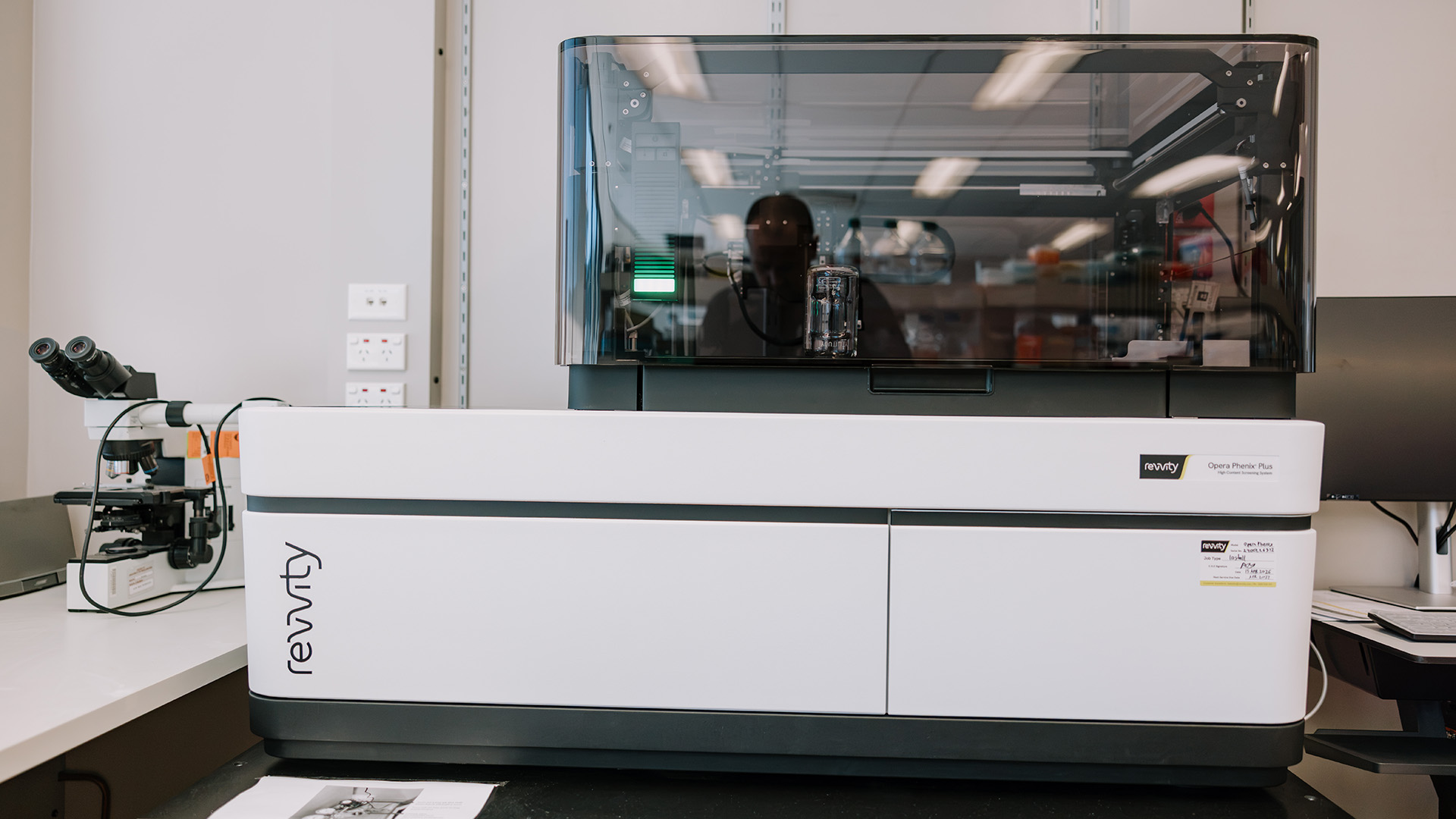
PRF has funded the acquisition and installation of an Opera Phenix automated cellular imaging system and a JANUS Automated Workstation, which prepares and loads assays for rapid, automated imaging and analysis. The two systems will enable UOW researchers to rapidly analyse complex biological processes underpinning Parkinson’s disease.
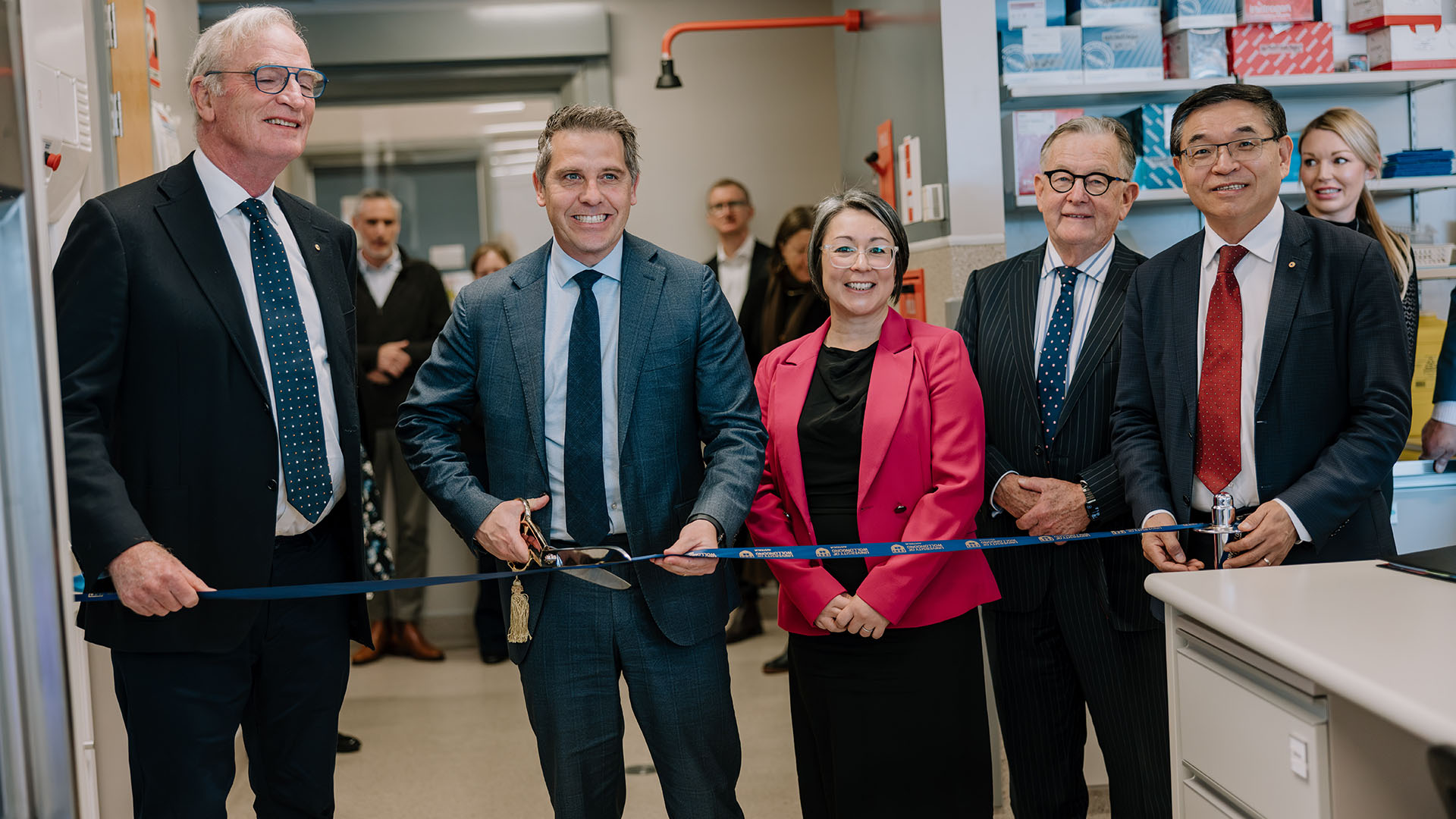
New South Wales Minister for Health and Member for Keira the Hon Ryan Park MP officially commissioned the platform today at the ÁñÁ«ÊÓƵapp’s Molecular Horizons research institute. He said the scale of Parkinson’s disease in NSW highlighted the urgency of continued investment in research.
“Parkinson’s has a profound impact not only on around 70,000 people living with the condition in NSW, but also on their families, carers and communities,” Mr Park said
“This world-class technology will allow researchers here at the ÁñÁ«ÊÓƵapp of ÁñÁ«ÊÓƵapp to work faster and at a much greater scale, helping to turn scientific discovery into better diagnosis, treatment and, ultimately, hope for a cure.”
UOW Vice-Chancellor Professor Max Lu AO said the investment would substantially strengthen the ÁñÁ«ÊÓƵapp’s capacity to deliver impactful health research.
"This gift from the Parkinson’s Research Foundation is an extraordinary investment in our research. It also reflects strong confidence in our researchers and the work underway at UOW. We are grateful for that confidence and conscious of the responsibility that comes with it,” Professor Lu said.
The donation was first proposed by former PRF board member Philip Coleman, who is living with Parkinson’s disease and saw it as a way to remove a significant financial barrier to fast track the ÁñÁ«ÊÓƵapp’s research.
Established in 2024 by Michael Katz AM and Dr Richard Balanson, PRF focuses on targeted philanthropic investments that remove bottlenecks in high-potential research. Since its establishment, it has contributed more than $4.5 million to support four Parkinson’s projects across Australia.
PRF co-founder Michael Katz said UOW’s research strength made it a compelling partner.
“With Parkinson’s being the fastest-growing neurological condition globally, we cannot afford slow science,” Mr Katz said.
“Through this innovative agreement, we are stepping in where traditional funding cannot and removing a financial barrier to this world-class research tool. This will ensure discovery isn’t held back by economics
“Our partnership with UOW will strengthen Australia’s role in the global fight against the disease by accelerating research, treatment and education to slow and stop Parkinson’s.”
UOW researcher Professor Lezanne Ooi said her team had four promising research projects underway and the platform would significantly expand the scale and speed of her team’s work.
“The Opera Phenix enables rapid analysis of large volumes of cell samples, allowing us to interrogate genetic, environmental and cellular pathways with far greater efficiency. This will directly accelerate our work towards improved diagnostics and therapies,” Professor Ooi said.
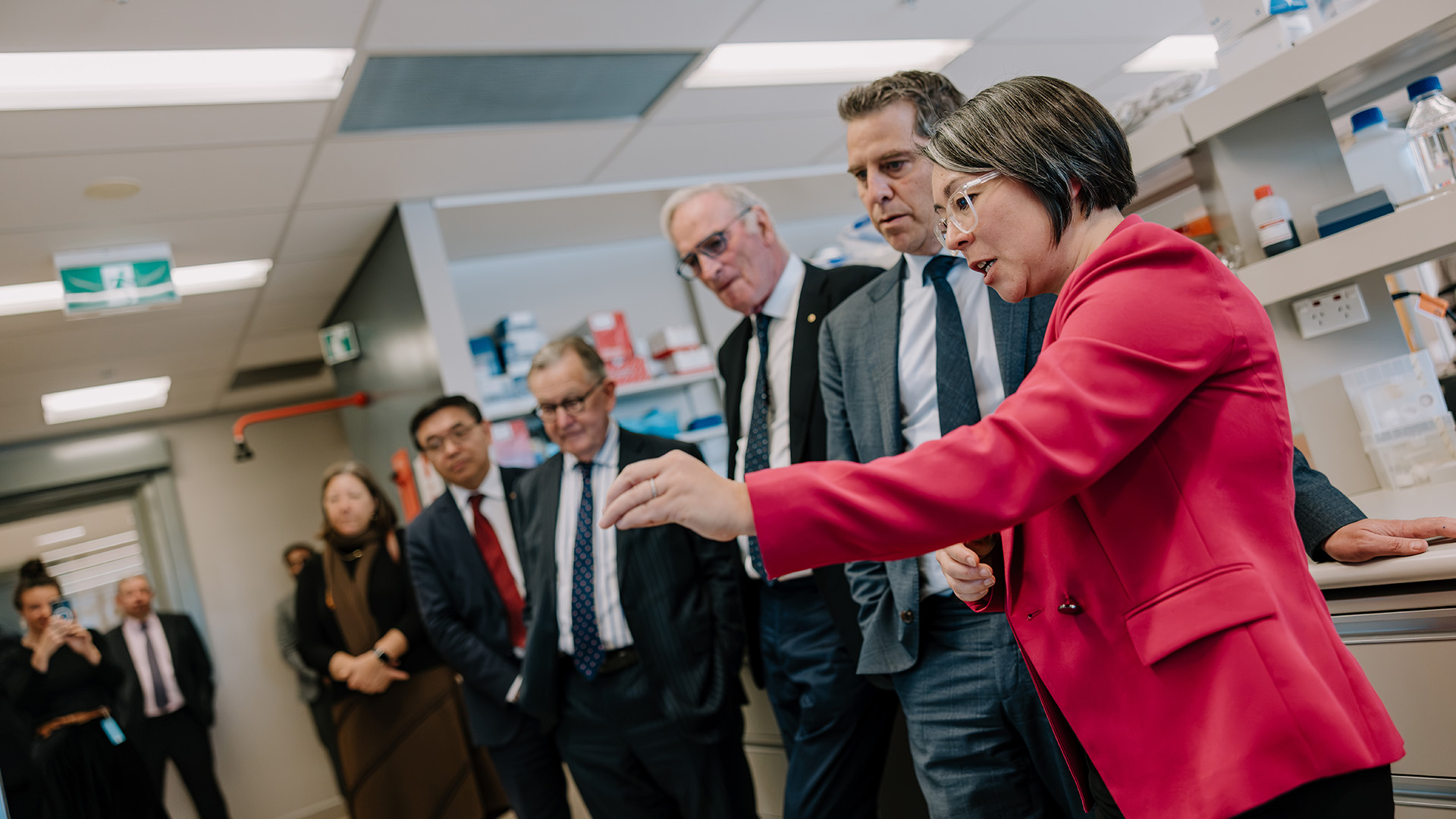
Professor Lezanne Ooi shows Minister Ryan Park and guests through the lab, where the new platform will support four Parkinson's research projects.
Parkinson’s disease is Australia’s second most common neurodegenerative disease after dementia, affecting more than 200,000 people nationally and around 10 million globally.
The new imaging platform is expected to support multiple research projects at Molecular Horizons – a specialist research institute that studies disease mechanisms and translates molecular understanding into real-world health applications – which will strengthen UOW’s contribution to global efforts to slow, treat and ultimately cure Parkinson’s disease.